
Snoring and sleep apnea in women deserve more attention than they usually get, especially when snoring is accompanied by fatigue, poor sleep, weight changes or metabolic concerns.
Most people treat snoring as a joke.
It’s the thing your partner teases you about, or the reason someone gets sent to the guest room.
But what if that nightly noise is telling you something about your health?
Regular snoring can sometimes indicate that your airway is becoming restricted during sleep. And in some people, it is a warning sign of obstructive sleep apnea, a condition associated with disrupted breathing, poor sleep quality and increased cardiovascular and metabolic risks.
This doesn’t mean everyone who snores has sleep apnea.
But when snoring appears alongside symptoms such as morning headaches, daytime fatigue, high blood pressure or insulin resistance, it’s worth looking beyond the noise.
Why Do We Snore in the First Place?
Snoring happens when airflow causes tissues in the upper airway to vibrate during sleep.
As you fall asleep, the muscles in your throat relax. If the airway becomes narrower, the surrounding tissues may vibrate as air passes through.
That vibration produces the familiar sound of snoring.
What Causes Snoring?
Several factors can contribute to a narrowed airway, including:
Nasal congestion or allergies
Sleeping on your back
Enlarged tonsils
Jaw and airway anatomy
Alcohol consumption before bedtime
Excess body fat around the neck and upper airway
Certain medications that relax airway muscles
Body composition is one factor worth understanding.
Research using MRI has shown that fat can accumulate around the tongue and upper airway in some people with obesity and sleep apnea.
Weight loss may reduce tongue fat and improve airway function in selected patients.
However, snoring isn’t always related to body weight.
People with a normal BMI can also snore or develop obstructive sleep apnea because of their airway anatomy and other risk factors.

What Is the Difference Between Snoring and Sleep Apnea?
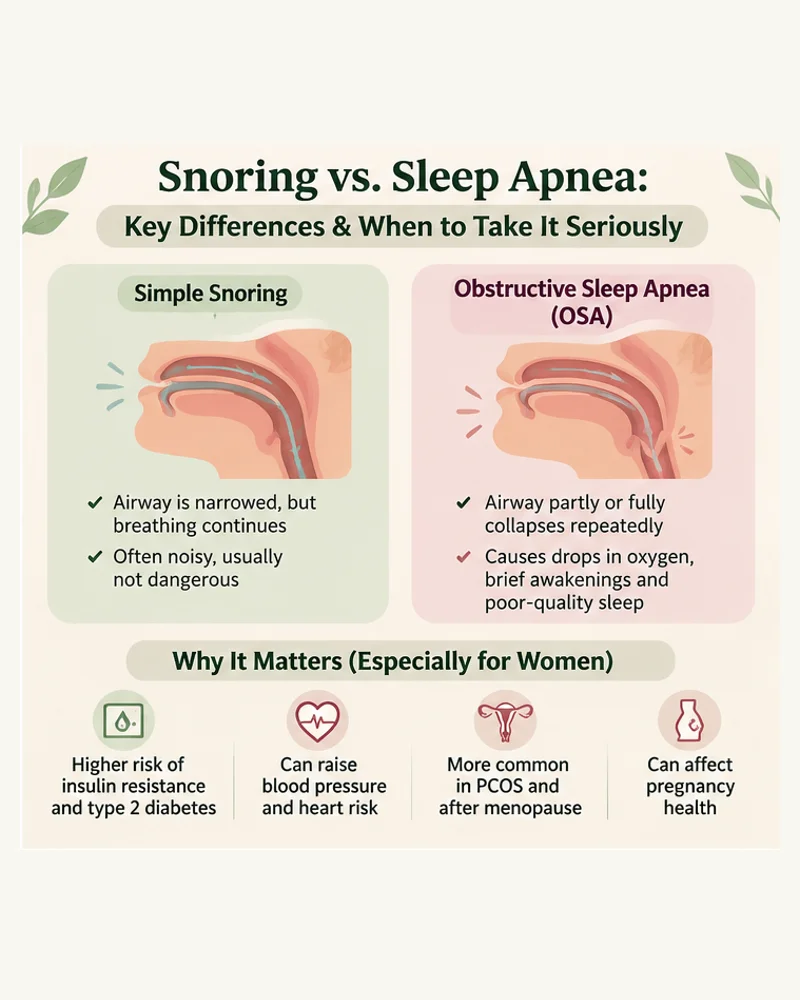
Snoring and obstructive sleep apnea are related, but they are not the same condition.
Simple Snoring
Simple snoring occurs when tissues vibrate during breathing without repeated clinically significant airway obstruction.
It may be disruptive, but it doesn’t necessarily cause dangerous oxygen drops or interrupted breathing.
Obstructive Sleep Apnea
Obstructive sleep apnea, or OSA, occurs when the upper airway repeatedly narrows or collapses during sleep.
These episodes can cause:
Reduced airflow
Intermittent drops in blood oxygen
Brief awakenings
Fragmented sleep
Increased stress on the cardiovascular system
A person may experience these breathing disturbances many times through the night without remembering them the next morning.
That is why someone can spend eight hours in bed and still wake up exhausted.
How Does Sleep Apnea Affect Metabolic Health?
Sleep apnea is more than a breathing problem.
Repeated breathing interruptions, reduced oxygen levels and fragmented sleep can influence several systems involved in cardiovascular and metabolic health.
1. Sleep Apnea and Insulin Resistance
Insulin helps your cells use glucose for energy.
Obstructive sleep apnea has been associated with reduced insulin sensitivity, including in studies that account for body weight.
One possible explanation involves intermittent low oxygen levels, sympathetic nervous system activation and inflammatory signalling.
These processes may contribute to impaired glucose regulation.
However, insulin resistance has multiple causes, and not every person with sleep apnea develops it.
2. Snoring and Type 2 Diabetes Risk
Some large observational studies have found that habitual snoring is associated with a higher risk of developing type 2 diabetes.
But there is an important distinction.
These findings do not prove that snoring itself causes diabetes.
Snoring may sometimes indicate undiagnosed sleep-disordered breathing, while shared factors such as body composition and metabolic health may also contribute to the association.
The practical takeaway is that persistent snoring deserves attention when other diabetes risk factors are present.
3. Sleep Apnea and High Blood Pressure
Obstructive sleep apnea is associated with hypertension and increased cardiovascular risk.
Repeated oxygen drops and arousals during sleep can activate the sympathetic nervous system, which helps regulate heart rate and blood pressure.
Over time, this repeated activation may contribute to elevated blood pressure.
Sleep apnea is especially important to consider in people with difficult-to-control hypertension.
4. Sleep Apnea and Weight Gain
Weight and sleep apnea can influence each other.
Excess fat around the neck and upper airway may make breathing during sleep more difficult.
At the same time, fragmented sleep can contribute to fatigue, reduced physical activity and changes in appetite regulation.
This can make weight management more challenging.
However, sleep apnea does not automatically cause weight gain, and weight loss is not the appropriate treatment goal for every patient.
Why Are Snoring and Sleep Apnea Often Missed in Women?
Snoring and sleep apnea are frequently associated with men.
That perception can make the condition easier to overlook in women.
While some women experience loud snoring and gasping, others may present with less obvious symptoms.
Sleep Apnea Symptoms in Women
Possible symptoms include:
Feeling tired despite adequate sleep
Waking up unrefreshed
Morning headaches
Difficulty concentrating
Brain fog
Insomnia or frequent awakenings
Low mood
Daytime sleepiness
Waking up frequently to urinate
Snoring or observed breathing pauses
These symptoms can overlap with stress, thyroid dysfunction, iron deficiency and hormonal changes.
That’s why evaluating the complete clinical picture matters.
PCOS and Sleep Apnea: What’s the Connection?
Women with polycystic ovary syndrome, or PCOS, have a higher prevalence of obstructive sleep apnea than women without PCOS.
This relationship isn’t explained by body weight alone.
PCOS commonly involves hormonal and metabolic changes, including androgen excess and insulin resistance, which may contribute to sleep-disordered breathing risk.
The 2023 International Evidence-based Guideline for PCOS recommends assessing women for sleep apnea symptoms, particularly when snoring occurs alongside unrefreshing sleep, daytime sleepiness or fatigue.
Should Women With PCOS Get Tested for Sleep Apnea?
Not every woman with PCOS needs an immediate sleep study.
However, symptoms should be discussed with a healthcare professional.
A validated screening questionnaire or specialist assessment may help determine whether further testing is necessary.
A formal sleep study is needed to establish the diagnosis.
Why Does Sleep Apnea Risk Increase During Perimenopause and Menopause?
Many women begin noticing changes in sleep during their 40s and 50s.
Some experience night sweats, insomnia and restless sleep.
Others start snoring for the first time.
The menopause transition can also be associated with an increased likelihood of sleep-disordered breathing.
How Hormonal Changes May Affect Breathing
Oestrogen and progesterone influence respiratory physiology.
Changes in these hormones may contribute to altered upper-airway function and breathing regulation during sleep.
Ageing and changes in body fat distribution may also play a role.
This means sleep apnea risk can rise during and after menopause, even when overall weight changes are modest.
If snoring begins alongside persistent fatigue, disrupted sleep or morning headaches, don’t automatically assume it’s just another symptom of perimenopause.
It may be worth investigating.
Is Snoring During Pregnancy a Concern?
Snoring can become more common during pregnancy.
Hormonal changes, nasal congestion, fluid shifts and changes in body composition may contribute to upper-airway narrowing.
However, persistent or worsening snoring should not always be dismissed as a normal pregnancy symptom.
Sleep-disordered breathing during pregnancy has been associated with increased risks of gestational diabetes and hypertensive disorders.
These associations do not mean every pregnant woman who snores will develop complications.
But snoring accompanied by breathing pauses, excessive daytime sleepiness or high blood pressure should be discussed with an obstetrician.
Why South Asian Women Should Pay Attention to Sleep Apnea
Body weight alone doesn’t always capture metabolic risk.
South Asian populations can develop insulin resistance, type 2 diabetes and increased visceral fat at lower BMI levels than some other populations.
Airway anatomy can also influence sleep apnea risk independently of weight.
This means a woman with a normal BMI may still experience sleep-disordered breathing.
For example, someone who snores regularly, wakes up exhausted and has a family history of diabetes may benefit from discussing sleep apnea screening with a healthcare professional.
The important point is not to assume that being slim rules out the condition.
What Are the Warning Signs of Sleep Apnea?
Not every snore requires medical investigation.
But certain symptoms and risk factors should prompt a closer look.
When Should You See a Doctor?
Consider an assessment if snoring occurs alongside:
Witnessed pauses in breathing
Choking or gasping during sleep
Persistent daytime sleepiness
Morning headaches
Unrefreshing sleep
High blood pressure
PCOS with sleep-related symptoms
Frequent nighttime awakenings
Significant fatigue despite adequate time in bed
If daytime sleepiness affects driving or other safety-sensitive activities, seek prompt medical advice.
How Is Obstructive Sleep Apnea Diagnosed?
A doctor will usually begin with your symptoms, medical history and risk factors.
Screening questionnaires may help identify people who need further evaluation.
What Is the STOP-BANG Questionnaire?
STOP-BANG is a screening tool that considers:
Snoring
Tiredness
Observed breathing pauses
Blood pressure
BMI
Age
Neck circumference
Sex
It can help estimate the likelihood of obstructive sleep apnea.
However, screening questionnaires cannot confirm the diagnosis.
Women may also have clinically significant sleep apnea despite not fitting the traditional higher-risk profile.
What Is a Sleep Study?
A sleep study monitors breathing and related physiological signals during sleep.
Depending on the situation, testing may involve:
Overnight polysomnography in a sleep laboratory
A home sleep apnea test for selected patients
A healthcare professional determines which method is appropriate.
Can Blood Tests Detect Sleep Apnea?
No blood test can diagnose obstructive sleep apnea.
However, certain metabolic findings may coexist with the condition.
These can include:
Elevated HbA1c or fasting glucose
Unfavourable cholesterol levels
High triglycerides
Other indicators of metabolic dysfunction
These results are not specific to sleep apnea.
A person can have normal blood tests and still have clinically significant sleep-disordered breathing.
This is why sleep apnea assessment depends on symptoms and appropriate sleep testing rather than a routine metabolic panel alone.
Can Nutrition and Lifestyle Changes Improve Sleep Apnea?
Nutrition and lifestyle changes can play an important supporting role in managing obstructive sleep apnea.
But they should complement, not replace, appropriate medical diagnosis and treatment.
1. Improve Body Composition When Appropriate
For people with overweight or obesity, weight management can reduce the severity of obstructive sleep apnea.
Some of this benefit may come from reducing fat around the upper airway and tongue.
However, weight loss does not consistently eliminate sleep apnea.
And it is not the solution for people whose condition is primarily influenced by other factors, such as airway anatomy.
2. Follow a Balanced, Mediterranean-Style Diet
A Mediterranean-style eating pattern emphasises vegetables, fruits, legumes, whole grains, nuts, seeds and unsaturated fats.
It may support weight management and cardiometabolic health.
For an Indian kitchen, this can look like:
Dal, chana and rajma
Seasonal vegetables
Whole fruits
Millets and whole grains
Nuts and seeds
Fish, if eaten
Appropriate amounts of unsaturated cooking oils
The objective is to support overall metabolic health, not follow a restrictive diet labelled as a sleep-apnea cure.
3. Include Protein and Strength Training
When weight management is appropriate, adequate protein and resistance training can help preserve muscle mass.
Regular physical activity also supports cardiovascular and metabolic health.
Exercise may improve sleep apnea-related outcomes, although it should not replace prescribed treatment.
4. Reduce Alcohol, Especially Before Bedtime
Alcohol can relax upper-airway muscles and worsen breathing disturbances during sleep.
For people who snore or have sleep apnea, avoiding alcohol close to bedtime is a sensible step.
Reducing overall alcohol intake may also support sleep and general health.
5. Support Better Sleep Habits
Maintain a consistent sleep schedule and create a comfortable sleep environment.
Sleeping on your side may reduce symptoms in some people with position-dependent sleep apnea.
However, positional strategies aren’t suitable for every patient.
6. Address Nasal Congestion
Nasal allergies or congestion may contribute to snoring and sleep discomfort.
Treating these problems can improve nasal breathing and sleep comfort, although it may not resolve underlying obstructive sleep apnea.
7. Get Medical Treatment When Needed
Moderate-to-severe obstructive sleep apnea often requires treatment such as positive airway pressure therapy.
Depending on the person, other options may include oral appliances, positional treatment or specialist interventions.
These decisions should be made with a qualified sleep specialist.
Can Treating Sleep Apnea Improve Blood Sugar and Metabolic Health?
Treating sleep apnea can improve sleep-related symptoms and may benefit blood pressure and other health outcomes.
However, improvements in blood sugar regulation are less consistent across studies.
This is why sleep apnea treatment should be part of a broader health plan when metabolic concerns are present.
For someone with diabetes or insulin resistance, the plan may also need to address nutrition, physical activity, medication and other contributing factors.
The goal is to treat both sleep-disordered breathing and any relevant metabolic conditions.
The Bottom Line: Snoring Is Worth Listening To
Snoring is not automatically a sign of disease.
But it shouldn’t always be dismissed as harmless background noise either.
When snoring is frequent, especially alongside fatigue, unrefreshing sleep, breathing pauses, high blood pressure, PCOS or metabolic concerns, it may signal obstructive sleep apnea.
And unlike simple snoring, obstructive sleep apnea can have important consequences for cardiovascular and metabolic health.
The answer isn’t to panic every time someone snores.
It’s to recognise when the pattern deserves attention.
Because understanding what’s happening during sleep may be an important part of understanding how you feel during the day.

Frequently Asked Questions
Does everyone who snores have sleep apnea?
No. Many people snore without having obstructive sleep apnea. However, persistent snoring accompanied by breathing pauses, daytime sleepiness or unrefreshing sleep should be evaluated.
Can snoring cause insulin resistance?
Snoring itself has not been established as a direct cause of insulin resistance. However, obstructive sleep apnea is associated with impaired glucose regulation, and habitual snoring can sometimes indicate undiagnosed sleep-disordered breathing.
Can snoring increase diabetes risk?
Some observational studies have found an association between habitual snoring and a higher risk of type 2 diabetes. This does not prove causation, but regular snoring alongside metabolic risk factors may warrant further assessment.
What are the symptoms of sleep apnea in women?
Symptoms may include snoring, fatigue, unrefreshing sleep, morning headaches, insomnia, brain fog, daytime sleepiness and observed breathing pauses. Some women have less obvious symptoms than the classic loud-snoring presentation.
Can women with PCOS have sleep apnea?
Yes. Women with PCOS have a higher prevalence of obstructive sleep apnea, even after accounting for BMI. Sleep-related symptoms should be assessed and investigated when appropriate.
Why does snoring increase during menopause?
Hormonal changes, ageing and shifts in body fat distribution may contribute to increased snoring and obstructive sleep apnea risk during and after menopause.
Can you have sleep apnea without being overweight?
Yes. People with a normal BMI can develop obstructive sleep apnea due to airway anatomy, nasal obstruction and other factors. Weight is only one part of the risk assessment.
Is snoring during pregnancy dangerous?
Snoring is relatively common during pregnancy and isn’t always dangerous. However, persistent or worsening snoring, particularly with breathing pauses or excessive sleepiness, should be discussed with an obstetrician.
Can losing weight stop snoring?
Weight loss may reduce snoring and sleep apnea severity in some people with overweight or obesity. However, it doesn’t guarantee resolution, and people at a healthy weight can still develop sleep apnea.
What is the best treatment for obstructive sleep apnea?
Treatment depends on severity, symptoms and individual circumstances. Positive airway pressure therapy is commonly recommended for moderate-to-severe obstructive sleep apnea, while other options may be appropriate for selected patients.
Can sleep apnea be diagnosed with blood tests?
No. Blood tests cannot diagnose sleep apnea. Diagnosis requires appropriate sleep testing, such as polysomnography or a home sleep apnea test for eligible patients.