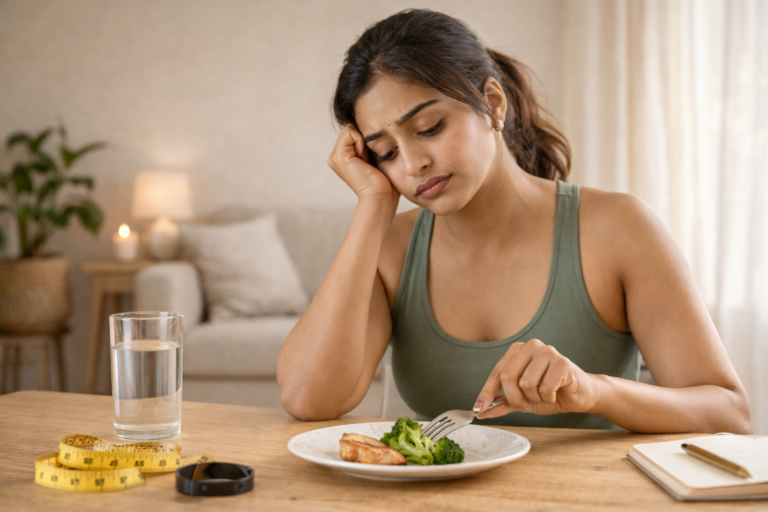
Food guilt can turn an otherwise enjoyable meal into hours of self-criticism, second-guessing and promises to eat less tomorrow.
You ate mithai at your cousin’s engagement.
Or the parathas your mother made because you hadn’t eaten all day and she worried.
And now you’re doing the thing so many of us do next.
Mentally logging it as a “cheat.” Promising to “make up for it” tomorrow. Maybe even skipping your next meal to compensate.
Sound familiar?
Here’s what almost nobody tells you: feeling guilty after eating doesn’t necessarily mean you’ve made a poor food choice or that you lack discipline.
Often, it’s a learned response shaped by years of food rules, family expectations, body image pressure and diet culture.
And when that guilt repeatedly leads to restriction, anxiety or loss of control around food, it can become more damaging to your relationship with eating than the occasional mithai or paratha ever was.
What Is Food Guilt?
Food guilt is the feeling of shame, regret or self-criticism that follows eating something you’ve labelled unhealthy, indulgent or forbidden.
It can show up as thoughts like:
“I shouldn’t have eaten that.”
“I’ve ruined my diet.”
“I’ll skip dinner to make up for it.”
“I need to burn this off tomorrow.”
“I was doing so well until today.”
Notice something about these thoughts?
None of them is necessarily about how hungry you were, how full you feel or what your body needs.
They’re about judgement.
Somewhere along the way, food stopped being just food and became a measure of how disciplined, healthy or worthy you believe you are.
And that’s where the problem begins.
Why Do We Feel Guilty After Eating?
For many women, food morality gets established early, long before they consciously begin thinking about nutrition.
Rice is “bad.”
Ghee is “fattening.”
Dessert is “cheating.”
Skipping a meal is “being good.”
These beliefs can come from family conversations, social media, childhood experiences, weight-loss diets and the broader wellness industry.
Over time, we start treating them as facts rather than beliefs we’ve learned.
How Diet Culture Creates Food Guilt
Diet culture often divides foods into two categories: good and bad.
Vegetables are good. Cake is bad. Eating less is good. Feeling full is somehow bad.
This creates a system where eating becomes a test of self-control.
And the moment you eat something outside your rules, guilt follows.
But nutrition doesn’t work in such absolute categories.
One meal doesn’t determine your health.
Your overall dietary patterns, nutritional adequacy, medical needs and relationship with food matter far more.
Why Food Guilt Can Feel Stronger in Indian Households
In many Indian households, food carries emotional meaning.
Food is how your mother shows care.
It’s how relatives welcome you home.
It’s how families celebrate weddings, festivals and milestones.
But food can also become a source of judgement.
The same relative who insists you eat another paratha might comment on your weight five minutes later.
Someone praises you for eating less.
Someone else tells you that you’ve become “healthy,” when what they really mean is that you’ve gained weight.
So food becomes both love and scrutiny.
And navigating that contradiction can make it difficult to eat without second-guessing yourself.
How Does Food Guilt Affect Your Relationship With Food?
Food guilt becomes particularly concerning when it changes how you behave around eating.
Feeling disappointed about a food choice occasionally isn’t automatically harmful.
The bigger issue is when guilt becomes persistent and starts driving restriction, secrecy, anxiety or compulsive behaviours.
1. Food Guilt Can Increase Stress Around Eating
Eating is supposed to nourish your body.
But when meals become surrounded by anxiety and judgement, food itself can become a source of stress.
Psychological stress can influence appetite, digestion, sleep and eating behaviour.
However, it’s important not to assume that every episode of food guilt causes a measurable cortisol spike or directly leads to abdominal fat gain.
The relationship between stress, hormones and eating is more complex.
What we do know is that persistent distress around food deserves attention, especially when it affects daily eating habits and quality of life.
2. Restriction Can Reinforce the Guilt-Binge Cycle
Here’s a familiar pattern.
You eat something you’ve labelled bad.
You feel guilty.
You decide to compensate by skipping a meal or eating very little the next day.
You become increasingly hungry, preoccupied with food or frustrated with the restriction.
Eventually, you may eat more than you intended.
And then the guilt returns.
This is often called the guilt-restriction-binge cycle.
For some people, rigid dietary restraint contributes to a pattern of overeating followed by shame and further attempts to restrict.
But the relationship isn’t identical for everyone, and not everyone who experiences food guilt develops binge eating.
The important point is that using restriction as punishment can make an already difficult relationship with food harder to manage.
3. Food Shame Can Contribute to Disordered Eating Patterns
Research has identified associations between shame and binge-eating symptoms.
Repeated guilt may also coexist with behaviours such as:
Frequently skipping meals to compensate
Avoiding social events involving food
Feeling anxious about eating outside a plan
Exercising to punish yourself for eating
Hiding what you’ve eaten
Feeling that your self-worth depends on food choices
These patterns deserve attention.
They don’t automatically mean someone has an eating disorder, but persistent distress and compensatory behaviours can be warning signs.
Is Food Guilt the Same as Emotional Eating?
No. Food guilt and emotional eating are related, but they are not the same thing.
Emotional eating refers to eating in response to emotions such as stress, loneliness, boredom or sadness rather than primarily in response to physical hunger.
Food guilt is the self-criticism or shame that may follow eating.
For example, you might eat a chocolate pastry because you’ve had an exhausting day.
That’s emotional eating.
If you then spend the evening telling yourself you’ve failed and decide to skip breakfast the next morning, that’s food guilt influencing your next behaviour.
The two can reinforce each other, but understanding the difference helps identify where support is needed.
Why Restricting Food After Eating More Can Backfire
The instinct to compensate after eating more than planned is understandable.
But skipping meals or drastically reducing food intake isn’t necessary to correct one meal.
When food intake becomes insufficient, your body responds through changes in hunger and satiety signals.
Hormones such as ghrelin and leptin participate in appetite regulation, although their responses depend on overall energy intake, body composition and other factors.
One skipped meal doesn’t create a predictable hormonal cascade in everyone.
Still, repeated restrictive eating can increase hunger, food preoccupation and the difficulty of maintaining consistent eating habits.
Instead of trying to undo yesterday’s meal, returning to your usual, adequate eating routine is generally more supportive.
How to Stop Feeling Guilty After Eating
You don’t necessarily break food guilt by finding more willpower.
You begin by questioning the rules that make certain foods feel like a personal failure.
1. Name the Thought Instead of Obeying It
The next time you catch yourself thinking, “I shouldn’t have eaten that,” notice the thought.
Ask yourself:
Who taught me that this food was bad?
Is this belief based on a genuine medical or nutritional need?
Or is it something I’ve absorbed from years of dieting and body commentary?
You can notice a thought without acting on it.
2. Stop Compensating for Meals
If you ate mithai at a family celebration, you don’t need to punish yourself by skipping dinner.
If you enjoyed a restaurant meal, you don’t need to exercise excessively the next morning.
Return to your usual eating routine.
Eat when you’re hungry.
Choose meals that provide adequate nourishment and satisfaction.
Consistency is more useful than punishment.

3. Stop Labelling Foods as Good or Bad
A samosa is a samosa.
It’s made from ingredients that provide energy and nutrients.
It may be something you eat occasionally, depending on your preferences and nutritional needs.
But eating it doesn’t make you bad.
Similarly, eating a salad doesn’t automatically make you disciplined or virtuous.
Food choices can have nutritional consequences without carrying moral value.
4. Pay Attention to Your Eating Patterns
Instead of recording only what you ate, begin noticing how you felt before and afterwards.
Did you eat because you were hungry?
Were you rushing?
Did you enjoy the meal?
Did someone make a comment that triggered guilt?
Did you immediately feel the need to compensate?
This kind of reflection may help you identify patterns that calorie tracking alone cannot explain.
5. Practise Food Flexibility
A healthy relationship with food includes nourishment, pleasure, cultural traditions and flexibility.
Some meals may be built around vegetables, protein, whole grains and fibre.
Others may be festival sweets, birthday cake or your mother’s cooking.
These experiences can coexist.
You don’t have to choose between caring about nutrition and enjoying food.
How to Handle Family Comments About Your Food and Weight
Sometimes the hardest part isn’t the food.
It’s what people say while you’re eating it.
An aunt commenting on your portion.
A relative asking why you’ve gained weight.
Someone reminding you that you shouldn’t be eating dessert.
You may not be able to control these comments, but you can set boundaries around how you respond.
Simple Responses You Can Practise
“I’m happy with what I’m eating, thank you.”
“I’d rather not discuss my weight.”
“I’m focusing on eating in a way that works for me.”
“Let’s talk about something else.”
You don’t owe everyone an explanation of your food choices.
And you don’t need to turn every family meal into a conversation about your body.
What Does a Healthy Relationship With Food Look Like?
A healthy relationship with food doesn’t mean eating perfectly.
It means being able to make food choices without constant fear, guilt or punishment.
It may look like:
Eating regular, nourishing meals
Enjoying favourite foods without feeling the need to compensate
Recognising hunger and fullness cues
Being flexible when routines change
Respecting genuine food preferences and medical needs
Enjoying celebrations without treating them as diet failures
Seeking support when eating becomes emotionally overwhelming
A balanced approach isn’t about ignoring nutrition.
It’s about supporting physical health without sacrificing psychological wellbeing.
When Should You Seek Help for Food Guilt?
Occasional regret after eating is different from persistent food-related distress.
If food guilt regularly leads to fasting, binge eating, purging, excessive exercise, anxiety around meals or avoidance of social situations, professional support can help.
A registered dietitian experienced in disordered eating and a qualified mental health professional can help you understand and address these patterns.
You don’t need to wait until your eating behaviours feel severe before asking for support.
The Bottom Line: Food Is Not a Moral Test
Food guilt isn’t necessarily a sign that you need more discipline.
Often, it’s a sign that you’ve spent years learning to judge yourself through what you eat.
And that is something you can begin to change.
You can care about nutrition and still eat mithai.
You can work toward your health goals and still enjoy your mother’s parathas.
You can make thoughtful food choices without making every meal a test of your willpower.
The goal isn’t to stop caring about what you eat.
It’s to stop letting what you eat determine how you feel about yourself.
Because a healthier relationship with food isn’t built through guilt.
It’s built through understanding, flexibility and trust.

Frequently Asked Questions
Why do I feel guilty after eating?
Food guilt often develops from rigid food rules, diet culture, body image concerns, family messaging or previous experiences with restrictive eating. You may feel guilty because you’ve labelled certain foods as bad, even when eating them isn’t inherently harmful.
How can I stop feeling guilty after eating unhealthy food?
Begin by questioning food labels such as good, bad or cheating. Avoid compensating through meal skipping or excessive exercise, and return to regular eating. If guilt is frequent or distressing, support from a qualified professional may help.
Is food guilt the same as emotional eating?
No. Emotional eating involves eating in response to emotions, while food guilt describes the shame or self-criticism that follows eating. They can occur together but represent different experiences.
Can food guilt cause weight gain?
Food guilt doesn’t directly or inevitably cause weight gain. However, when it contributes to repeated restriction, overeating, stress or disrupted eating patterns, it may indirectly affect eating behaviour and weight management.
Does food guilt affect cortisol and hormones?
Persistent psychological stress can influence hormonal and appetite-regulation systems. However, evidence does not establish that every episode of food guilt causes a cortisol spike or directly disrupts reproductive hormones.
Why do I binge eat after restricting food?
For some people, restrictive eating can increase hunger, food preoccupation and feelings of deprivation, contributing to overeating or binge-eating patterns. Psychological distress and other factors can also play a role.
Should I skip my next meal after overeating?
Generally, there’s no need to compensate for eating more than planned by skipping your next meal. Returning to regular, adequate eating can help prevent a cycle of restriction and heightened hunger.
How do I handle family comments about my weight or food?
Use brief, neutral boundaries such as “I’d rather not discuss my weight” or “I’m comfortable with what I’m eating.” If repeated commentary affects your relationship with food, consider talking to a supportive professional.
Can you eat healthy without restricting your favourite foods?
Yes. A nutritious eating pattern can include a variety of foods, including those eaten for enjoyment, celebration or cultural connection. Dietary flexibility can support long-term consistency.
When does food guilt become a serious concern?
Food guilt deserves professional attention when it frequently causes distress, restrictive eating, binge eating, compensatory exercise, purging or avoidance of social situations involving food.