A DEXA scan for perimenopause can reveal something your bathroom scale cannot: how much of your body is made up of lean tissue, fat and bone.
Somewhere around 40, many women notice that the scale hasn’t moved much, but everything else has.
Clothes fit differently. The waist thickens even when the number stays the same. Energy dips. Strength feels harder to hold onto.
The scale stayed quiet.
Your body didn’t.
That’s because weight was never the whole story. Body composition was.
And during perimenopause, understanding body composition can become especially important.
Why the Scale Doesn’t Tell the Full Story During Perimenopause
Two women can weigh exactly the same and have very different body compositions.
One may carry more muscle and less body fat. The other may have less muscle and more abdominal fat, including visceral fat, which is stored deeper around internal organs.
The number on the scale cannot distinguish between them.
Neither can BMI.
This matters because muscle mass, body fat distribution and bone health all influence long-term health.
A woman can maintain the same weight while gradually losing muscle and gaining fat.
And because these changes can happen without significant weight gain, they are easy to overlook.

What Is Body Composition?
Body composition describes the proportions of fat, lean tissue and bone in your body.
Rather than asking only how much you weigh, body composition assessment looks at what contributes to that weight.
This becomes particularly useful when evaluating changes in strength, muscle mass, fat distribution and metabolic health.
What Happens to Muscle Mass During Perimenopause?
Perimenopause is the transitional phase before menopause, when reproductive hormone levels begin to fluctuate.
Oestrogen plays several roles beyond reproduction, including influencing skeletal muscle function, metabolism and musculoskeletal health.
As women move through menopause, changes in oestrogen, ageing, physical activity and nutrition can contribute to declining muscle mass and strength.
But muscle loss is not inevitable at the same rate for everyone.
Women who maintain adequate nutrition and regularly challenge their muscles through resistance training can preserve and improve strength throughout midlife.
How Does Oestrogen Affect Muscle Mass?
Oestrogen influences muscle function, repair and the body’s response to exercise.
As oestrogen levels decline, changes in muscle protein turnover and recovery may contribute to age-related muscle loss.
Other factors, including reduced physical activity, inadequate protein intake, poor sleep and chronic health conditions, can compound these changes.
This helps explain why women may notice differences in strength or body composition even when their overall weight remains stable.
The important thing to understand is that hormonal changes are only part of the picture.
Muscle continues to respond to exercise and adequate nourishment throughout perimenopause and beyond.
Why Muscle Mass Matters for Metabolism and Bone Health
Muscle isn’t just about strength or appearance.
It is closely connected to metabolic health, physical independence and the health of your bones.
1. Muscle Supports Metabolic Health
Skeletal muscle is an important tissue for glucose uptake and insulin sensitivity.
Maintaining muscle helps support glucose regulation, physical performance and energy expenditure.
As muscle mass declines, metabolic health can become more difficult to maintain, particularly when accompanied by increased abdominal fat.
2. Muscle and Bone Health Are Connected
Muscle and bone respond to mechanical loading.
When you walk, lift weights or perform resistance exercises, your muscles place forces on your bones that help maintain their strength.
This relationship becomes especially important during the menopause transition, when declining oestrogen can accelerate bone loss.
Preserving muscle strength also supports balance and mobility, which are important for reducing fall risk as women age.
3. Muscle Helps Maintain Long-Term Physical Function
Maintaining muscle isn’t only about what your body looks like today.
It supports your ability to climb stairs, carry groceries, travel, exercise and remain physically independent later in life.
This is why muscle preservation during perimenopause is an investment in long-term health.
What Is a DEXA Scan for Perimenopause?
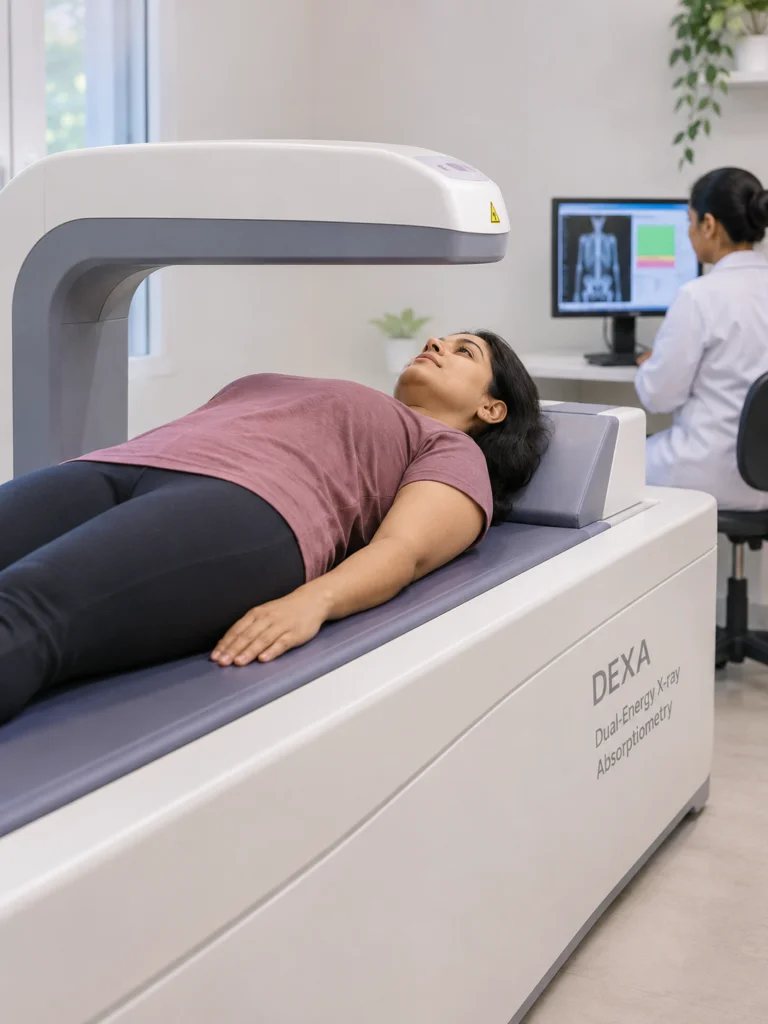
A DEXA scan, also called a DXA scan, uses low-dose X-rays to measure body tissues.
DEXA stands for dual-energy X-ray absorptiometry.
It is widely used to assess bone mineral density and, with appropriate whole-body scanning equipment and software, can also measure body composition.
A whole-body DEXA scan can provide information about fat mass, lean tissue and regional fat distribution.
A standard bone-density DEXA scan, however, is different from a whole-body composition scan. Not every DEXA appointment automatically includes muscle and fat analysis.
What Does a DEXA Body Composition Scan Measure?
A whole-body DEXA scan generally reports several useful measurements.
Lean Mass
Lean mass represents non-fat soft tissue, including muscle, water and other tissues.
It can help estimate changes in the body’s muscle-related tissue, but it is not a direct measurement of skeletal muscle alone.
Fat Mass
DEXA can measure total and regional fat mass.
This can help show whether fat distribution has changed, including around the trunk.
Visceral Fat
Some DEXA systems can estimate visceral adipose tissue using specialised software.
This is relevant because higher visceral fat is associated with cardiometabolic risk.
However, visceral fat is estimated rather than directly imaged in the same way as CT or MRI.
Bone Mineral Density
DEXA can also assess bone mineral density, an important component of osteoporosis and fracture-risk evaluation.
Bone-density assessment typically focuses on specific skeletal sites, such as the hip and lumbar spine.
Why Is a DEXA Scan Useful During Perimenopause?
A DEXA body composition scan may help identify changes that are difficult to see through weight alone.
For example, a woman might weigh the same as she did five years ago but have:
Less lean tissue
More total body fat
Increased abdominal fat
Changes in regional fat distribution
These findings can help guide conversations about nutrition, exercise and metabolic health.
In some clinical situations, DEXA can also help monitor changes in body composition over time.
But it is important to understand that not every woman needs this level of testing.
The value of a scan depends on whether its results would meaningfully influence your care.
DEXA Scan vs Smart Scale: Which Is More Accurate?
If you’ve stepped onto a smart scale that displays body fat percentage, muscle mass and water weight, you’ve already used a form of body composition assessment.
Most smart scales use bioelectrical impedance analysis, or BIA.
BIA estimates body composition by measuring how an electrical current travels through body tissues.
DEXA and BIA can both provide useful information, but they work differently.
How Does BIA Work?
Bioelectrical impedance analysis uses electrical resistance to estimate fat-free mass, fat mass and body water.
The results depend partly on assumptions about the body’s hydration and tissue composition.
That means readings may change depending on:
Hydration
Recent meals
Exercise
Time of day
Device quality
Testing conditions
A change in your smart scale’s muscle reading doesn’t necessarily mean you’ve gained or lost that amount of muscle.
How Is DEXA Different?
DEXA uses X-ray attenuation to distinguish between bone mineral content, fat mass and lean soft tissue.
It generally provides more detailed regional body composition information than a typical consumer smart scale.
However, DEXA isn’t completely free from measurement variability.
Hydration, positioning, equipment calibration and differences between machines can still affect results.
For meaningful follow-up comparisons, consistent testing conditions and preferably the same calibrated equipment are important.
DEXA vs BIA: Quick Comparison
| Feature | DEXA Scan | BIA Smart Scale |
|---|---|---|
| Method | Low-dose X-rays | Electrical impedance |
| Body fat | Measures total and regional fat | Estimates body fat |
| Lean tissue | Measures lean soft tissue | Estimates fat-free mass |
| Bone density | Available through appropriate DXA assessment | Not measured directly |
| Visceral fat | Estimated on some systems | Estimated on some devices |
| Convenience | Requires specialised equipment | Usually available at home or gyms |
| Testing variability | Generally more controlled | More sensitive to hydration and conditions |
BIA isn’t useless.
It can be a practical way to monitor broad trends when used consistently.
But when detailed body composition measurement is clinically relevant, DEXA may offer additional information.
Should Every Woman Get a DEXA Scan During Perimenopause?
Not necessarily.
This is an important distinction.
Although understanding muscle mass and bone health matters during perimenopause, routine DEXA scans are not recommended for every healthy woman simply because she has reached her late 30s or 40s.
The decision depends on medical history, fracture risk, symptoms and the clinical purpose of the scan.
When Might a Bone-Density DEXA Scan Be Recommended?
A healthcare provider may consider bone-density testing when a woman has risk factors such as:
Early menopause or premature ovarian insufficiency
Previous low-trauma fractures
Low body weight
Long-term use of certain medications, including glucocorticoids
Conditions associated with bone loss
Other significant osteoporosis risk factors
Guidelines generally recommend bone-density screening for women aged 65 and older, with earlier testing for selected women at increased fracture risk.
Indian menopause guidance also recognises specific indications for testing during the menopausal transition.
When Might a Body Composition DEXA Scan Be Useful?
Whole-body composition assessment may be considered in selected situations, such as concerns about low muscle mass, poor physical function, or substantial changes in body composition.
It may also be useful when a practitioner needs more detailed measurements to guide care.
But the scan should answer a meaningful clinical question.
It should not become another number women feel pressured to optimise.
How to Read Your DEXA Scan Results
If you do undergo a whole-body DEXA scan, the report may contain several measurements.
Lean Mass and Appendicular Lean Mass
Lean mass provides information about non-fat soft tissue.
Appendicular lean mass measures the lean tissue in the arms and legs and is commonly used as an estimate of skeletal muscle mass.
A clinician may interpret this alongside height, strength and physical function.
Body Fat Percentage
Body fat percentage shows the proportion of total body mass classified as fat.
This number should be interpreted in context rather than compared with a single universal target.
Age, health history and body composition all matter.
Regional Fat Distribution
DEXA may show how fat is distributed across the body.
Some reports include trunk fat or android-to-gynoid fat ratios, which describe abdominal versus hip and thigh fat distribution.
Bone Mineral Density
Bone-density reports typically include measurements such as T-scores or Z-scores, depending on age and menopausal status.
These scores require appropriate clinical interpretation.
A body composition report and a diagnostic bone-density assessment are not interchangeable.
How to Preserve Muscle Mass During Perimenopause
The encouraging part is that muscle responds to being challenged.
Even when hormonal changes influence body composition, strength training and nutrition can help preserve and build muscle.
1. Make Resistance Training a Priority
Resistance training is one of the most effective ways to maintain muscle strength and function.
Exercises can include:
Squats
Lunges
Deadlifts
Rows
Push-ups
Resistance band exercises
Weight training
Aim to include muscle-strengthening activities at least twice a week, adjusting frequency and intensity to your fitness level.
Progressive resistance training can improve strength and muscle-related outcomes in middle-aged and postmenopausal women.
2. Eat Enough Protein
Protein provides the amino acids needed to maintain and repair muscle tissue.
The standard adult recommended dietary allowance is approximately 0.8 grams per kilogram of body weight daily.
However, many physically active midlife and older women may benefit from higher intakes, often around 1.0–1.5 grams per kilogram daily, depending on individual needs.
For example, protein sources can include:
Eggs
Paneer
Curd
Dal and lentils
Tofu and soy foods
Chicken
Fish
Beans and legumes
Distributing protein across meals can make daily intake easier to achieve.
3. Include Weight-Bearing Activity
Weight-bearing movement supports bone health and physical function.
Walking, climbing stairs, dancing and appropriate impact exercises can complement resistance training.
The right activities depend on your bone health, fitness level and any medical limitations.
4. Don’t Ignore Recovery
Muscle growth and strength improvements depend on both exercise and recovery.
Consistent sleep, adequate nutrition and appropriate rest between demanding sessions help support adaptation.
5. Focus on Long-Term Consistency
You don’t need to train intensely every day.
A manageable routine maintained over months and years is more valuable than occasional periods of overtraining.
Your goal is to build a body that remains strong and capable.
How to Track Body Composition Without Obsessing Over Weight
A DEXA scan can be useful when clinically appropriate, but it is not the only way to evaluate progress.
You can also track:
Strength improvements
Waist circumference
Exercise performance
Walking speed and endurance
Functional mobility
Changes in clothing fit
Energy and recovery
These measures can provide practical information about how your body is responding.
If a scan is repeated, your practitioner should determine the appropriate interval based on its purpose and the expected rate of meaningful change.
Frequent scanning is not automatically better.
The Bottom Line: Muscle Mass Is a Long-Term Investment
Weight is a number.
Muscle mass is part of a much bigger picture.
During perimenopause, body composition can change even when the scale barely moves.
Declining muscle strength, increasing abdominal fat and changes in bone health deserve attention because they influence how your body functions over the years ahead.
A DEXA scan can help provide more detailed information when testing is appropriate.
But the most important step isn’t necessarily getting a scan.
It’s understanding why muscle matters and taking action to preserve it.
Strength training. Adequate protein. Weight-bearing activity. Recovery. Consistency.
These foundations matter whether or not you ever step onto a DEXA scanner.
Because the goal isn’t simply to weigh less.
It’s to stay stronger for longer.

Frequently Asked Questions
What is a DEXA scan for perimenopause?
A DEXA scan uses low-dose X-rays to assess bone mineral density or, with whole-body composition software, fat and lean tissue. It may help selected women understand body composition changes during perimenopause.
Can a DEXA scan measure muscle mass?
A whole-body DEXA scan measures lean soft tissue, including tissue associated with skeletal muscle. It does not directly isolate muscle from all other lean tissues, but measurements such as appendicular lean mass can help assess muscle-related changes.
Is a DEXA scan only for bone density?
No. DEXA is widely used for measuring bone mineral density, but whole-body DEXA scans can also assess fat mass and lean tissue. These are different scan protocols, so confirm which assessment is being offered.
Should women get a DEXA scan at 40?
Not routinely based on age alone. Testing may be appropriate for women with specific bone-health risk factors, concerns about low muscle mass, or another clinical indication. A healthcare provider can help determine whether it is useful.
Can you lose muscle during perimenopause without losing weight?
Yes. Body composition can change while total weight stays similar. A woman may gradually lose muscle-related lean tissue while gaining fat, particularly around the abdomen.
Is DEXA more accurate than a smart scale?
DEXA generally provides more detailed and reliable regional body composition information than consumer BIA scales. However, both methods have limitations, and consistent testing conditions remain important.
Does DEXA measure visceral fat?
Some DEXA systems estimate visceral fat using specialised software. These estimates can help assess body fat distribution, but they are not the same as directly measuring visceral fat with CT or MRI.
Can strength training improve muscle mass during perimenopause?
Yes. Progressive resistance training can improve muscle strength and help preserve or increase muscle mass during midlife and after menopause.
How much protein should women eat during perimenopause?
Protein needs vary. While the standard adult RDA is 0.8 g/kg/day, some active midlife women may benefit from around 1.0–1.5 g/kg/day, depending on activity, health status and nutritional goals.
How often should you repeat a DEXA scan?
Repeat testing depends on why the scan was performed, clinical risk, treatment plans and whether meaningful changes are expected. Your clinician should recommend the appropriate interval.