Why PCOS is a metabolic condition, not just a reproductive one
PCOS is not just a reproductive condition. It is a full-body metabolic and hormonal disorder, and what you eat plays a direct role in how loud or quiet your symptoms are. This is not about restriction. It is about understanding the biology so you can make choices that genuinely move the needle.
The Insulin Connection
The best foods to eat with PCOS for blood sugar and hormone balance
Between 50 and 70% of women with PCOS symptoms have insulin resistance, even those who are lean. When cells stop responding to insulin efficiently, the pancreas compensates by pumping out more of it. That excess insulin signals the ovaries to produce more androgens, like testosterone, which is behind many of the most frustrating PCOS symptoms: acne, hair thinning, irregular periods, and difficulty with PCOS weight loss.
The most powerful dietary lever you have is managing blood sugar control. Not eliminating carbohydrates, but choosing and pairing them well. A 2019 meta-analysis published in Human Reproduction found that low glycemic index diets significantly reduced fasting insulin, testosterone, and improved menstrual regularity in women with PCOS compared to conventional diets.
The practical move: always pair carbohydrates with protein, fat, or fibre. A bowl of plain white rice spikes blood sugar fast. That same rice with lentils, olive oil, and vegetables? Completely different glucose curve.
This is where a more supportive PCOS diet plan becomes powerful, not because it is restrictive, but because it helps the body feel metabolically safer and more stable.
Anti-inflammatory eating and the Mediterranean diet approach for PCOS
Chronic low-grade inflammation is both a feature of PCOS and a driver of it. Research shows that women with PCOS have elevated inflammatory markers like C-reactive protein (CRP) and TNF-alpha, independent of weight. Inflammation worsens insulin resistance, disrupts ovulation, and contributes to the hormonal chaos of PCOS.
An anti-inflammatory dietary pattern, like the Mediterranean diet, has been studied specifically in PCOS populations. A 2020 randomised trial found it reduced androgen levels, improved insulin sensitivity, and lowered CRP compared to a standard diet.
These are the foods that consistently show up in the research:
Olive Oil
Rich in oleocanthal, which has similar anti-inflammatory action to ibuprofen at the cellular level.
Fatty Fish
Omega-3s reduce inflammatory cytokines and have been shown to lower testosterone in PCOS.
Berries
High-antioxidant polyphenols that reduce oxidative stress, which is elevated in PCOS.
Leafy Greens
Magnesium-rich foods that support insulin signalling and reduce inflammation.
Walnuts and Flax
Plant-based omega-3s plus lignans that support hormone balance through healthy estrogen metabolism.
Legumes
High fibre, low glycaemic, and rich in inositol, which directly supports ovarian function.
This kind of anti-inflammatory approach also supports broader metabolic health, especially in women experiencing fatigue, cravings, or early signs of metabolic dysfunction alongside PCOS.
Getting there does not require a dramatic dietary overhaul. It requires adding rather than removing: a handful of seeds here, a cup of lentils there.
Gut health and PCOS: why your microbiome affects your hormones
Emerging research is connecting gut microbiome health directly to PCOS. Women with PCOS show reduced microbial diversity compared to healthy controls, and this imbalance appears to influence estrogen metabolism, androgen levels, and insulin signalling.
The gut houses an enzyme collection called the estrobolome, which processes and recycles estrogen. A disrupted microbiome means estrogen can be reabsorbed rather than excreted, shifting the hormonal balance further.
Fermented foods like yoghurt, kefir, kimchi, and sauerkraut, along with prebiotic-rich foods like garlic, onion, oats, and asparagus, directly feed beneficial bacteria and support this system.
Most people eat around 15g of fibre per day. The research-backed target for hormonal and metabolic health is closer to 30 to 35g. In PCOS, adequate fibre slows glucose absorption, feeds beneficial gut bacteria, and supports the elimination of excess hormones.
Getting there does not require a dramatic dietary overhaul. It requires adding rather than removing: a handful of seeds here, a cup of lentils there.
And for women also experiencing bloating, sluggish digestion, constipation, or discomfort after meals alongside PCOS, gently supporting digestive health and the gut microbiome can often make hormonal symptoms feel easier to manage.
PCOS supplements with strong research evidence
Whole food first, always. But the research on certain nutrients in PCOS is strong enough to deserve a dedicated conversation.
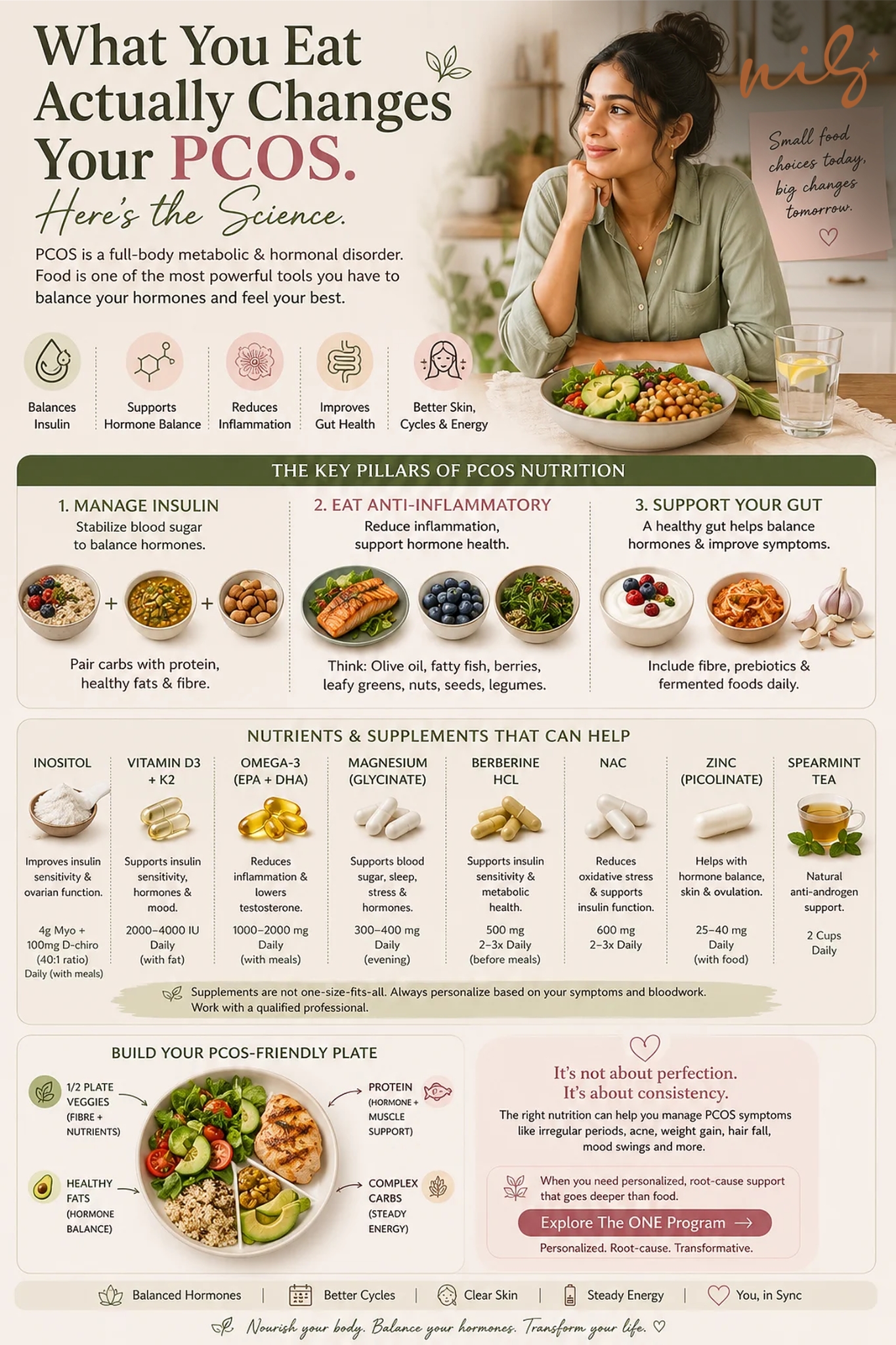
Inositol (Myo + D-chiro, 40:1 ratio)
One of the most researched supplements in PCOS. Supports insulin signalling, ovarian function, and egg quality. Studies show it can lower AMH, reduce androgen levels, and restore cycle regularity.
Best form:
Powder or capsule combining Myo-inositol and D-chiro-inositol in a 40:1 ratio.
Studied dose:
4g Myo-inositol and 100mg D-chiro-inositol daily, split into morning and evening doses with meals.
Vitamin D3
Deficiency is extremely common in PCOS and correlated with insulin resistance, high androgens, and cycle disruption.
Best form:
D3 (cholecalciferol) paired with K2 (MK-7).
General studied range:
2000 to 4000 IU daily with a fat-containing meal.
Omega-3 Fatty Acids
Reduce triglycerides, lower testosterone, and decrease inflammatory markers in PCOS.
Best form:
Triglyceride form fish oil.
Studied dose:
1000 to 2000mg combined EPA and DHA daily.
Magnesium
Supports glucose metabolism, sleep, stress regulation, and insulin signalling.
Best form:
Magnesium glycinate or threonate.
Studied dose:
300 to 400mg daily, ideally in the evening.
Berberine
Often called “nature’s metformin.”
Best form:
Berberine HCl.
Studied dose:
500mg two to three times daily before meals.
Important: not appropriate during pregnancy and should not be used long-term without guidance.
N-Acetyl Cysteine (NAC)
Supports glutathione production and improves insulin sensitivity.
Studied dose:
600mg two to three times daily.
Zinc
Supports insulin receptor function, skin health, ovulation, and androgen regulation.
Best form:
Zinc picolinate or bisglycinate.
Studied dose:
25 to 40mg daily with food.
Especially useful for women experiencing hormonal acne, hair fall, or signs of androgen excess.
Spearmint
Has documented anti-androgenic properties.
Most studied form:
Two cups of spearmint tea daily.
Important note: supplements are not one-size-fits-all. What works well for one woman with PCOS may be unnecessary or even counterproductive for another. This is highly individualised territory.
Always work with a qualified practitioner before starting supplements, because the right approach depends on your symptoms, bloodwork, and overall health history.
The role of protein in PCOS management, what the research says
Protein at meals is one of the simplest and most underused tools in PCOS management.
Protein blunts the glucose response to carbohydrates, promotes satiety, supports lean muscle mass, and improves insulin sensitivity.
Aim for a protein source at every meal:
- eggs
- fish
- poultry
- legumes
- tofu
- Greek yoghurt
This is not about obsessively tracking grams. It is about making protein a structural part of every plate.
Protein also supports liver function, and the liver is where hormones are metabolised and cleared. A sluggish liver can influence hormonal balance and worsen symptoms over time.

The Bottom Line
PCOS is a complex condition, but food is one of the most immediate and accessible tools you have to influence its course.
The research consistently points toward a dietary pattern that:
- stabilises blood sugar
- reduces inflammation
- supports gut health
- improves insulin sensitivity
- nourishes hormone function
This is not about perfection. It is about consistency and understanding what your body is asking for.
Small, sustainable shifts compound over time.
And for many women, improving nutrition is where they first begin noticing:
- more stable energy
- fewer cravings
- better cycles
- clearer skin
- improved mood
- more trust in their bodies again
If your PCOS symptoms are layered with insulin resistance, fatigue, digestive issues, thyroid concerns, or long-standing hormonal imbalance, a more personalised and root-cause approach can help you understand what your body specifically needs, something we focus on deeply through our women-centric functional nutrition programs.