The 2026 ATA guidelines on hypothyroidism and pregnancy bring important changes for women planning conception, already pregnant, or managing Hashimoto’s thyroiditis during their reproductive years.
After nearly a decade, the American Thyroid Association has released updated guidance for thyroid disease across preconception, pregnancy, and postpartum care. Published in 2026 in Thyroid®, these guidelines give doctors and patients a more nuanced way to manage thyroid function during one of the most hormonally sensitive phases of a woman’s life.
For women with hypothyroidism, Hashimoto’s thyroiditis, thyroid antibodies, or those already taking levothyroxine, the updates are significant. In many cases, they are also reassuring.
The biggest shift is this: thyroid care in pregnancy is not one-size-fits-all. Timing, TSH levels, antibody status, medication type, iodine intake, and individual risk all matter.
Here are the key changes patients should understand before making decisions with their healthcare provider.
What Are the 2026 ATA Guidelines on Hypothyroidism and Pregnancy?
The 2026 ATA guidelines are updated recommendations from the American Thyroid Association for managing thyroid disease before conception, during pregnancy, and after delivery.
They cover thyroid conditions such as:
- Hypothyroidism
- Hashimoto’s thyroiditis
- Subclinical hypothyroidism
- Thyroid antibody positivity
- Hyperthyroidism
- Thyroid nodules
- Postpartum thyroid concerns
- Iodine needs before and during pregnancy
For patients, the most relevant updates are around TSH targets, when to treat mildly elevated TSH, whether thyroid antibodies need medication, which thyroid medications are preferred, and how iodine should be handled before and during pregnancy.
Why the 2026 ATA Thyroid Pregnancy Guidelines Matter
Pregnancy changes thyroid function in a major way.
In early pregnancy, the hormone hCG naturally stimulates the thyroid gland. This can cause TSH levels to drop, especially in the first trimester. That drop can be completely normal.
This is why using regular, non-pregnancy thyroid ranges during pregnancy can lead to confusion, overdiagnosis, and unnecessary medication changes.
The 2026 ATA thyroid pregnancy guidelines place more emphasis on pregnancy-specific interpretation of thyroid labs. They also recognize that mild abnormalities may not always need immediate treatment.
That is a meaningful shift for women who have been told to panic over a single TSH reading.
What Are the New TSH Targets During Pregnancy?
One of the most important parts of managing hypothyroidism and pregnancy is understanding what TSH range is appropriate for each stage.
TSH stands for thyroid-stimulating hormone. It is one of the key markers doctors use to assess thyroid function.
A TSH level that looks “too low” outside pregnancy may be normal in early pregnancy.
Why Pregnancy Changes TSH Levels
During the first trimester, hCG rises rapidly. Because hCG can stimulate the thyroid, TSH may naturally fall.
A TSH level that looks “too low” outside pregnancy may be normal in early pregnancy.
This is why pregnancy-specific TSH ranges matter.
TSH Target Before Pregnancy
For women already taking levothyroxine and planning pregnancy, the goal is usually to optimize thyroid levels before conception.
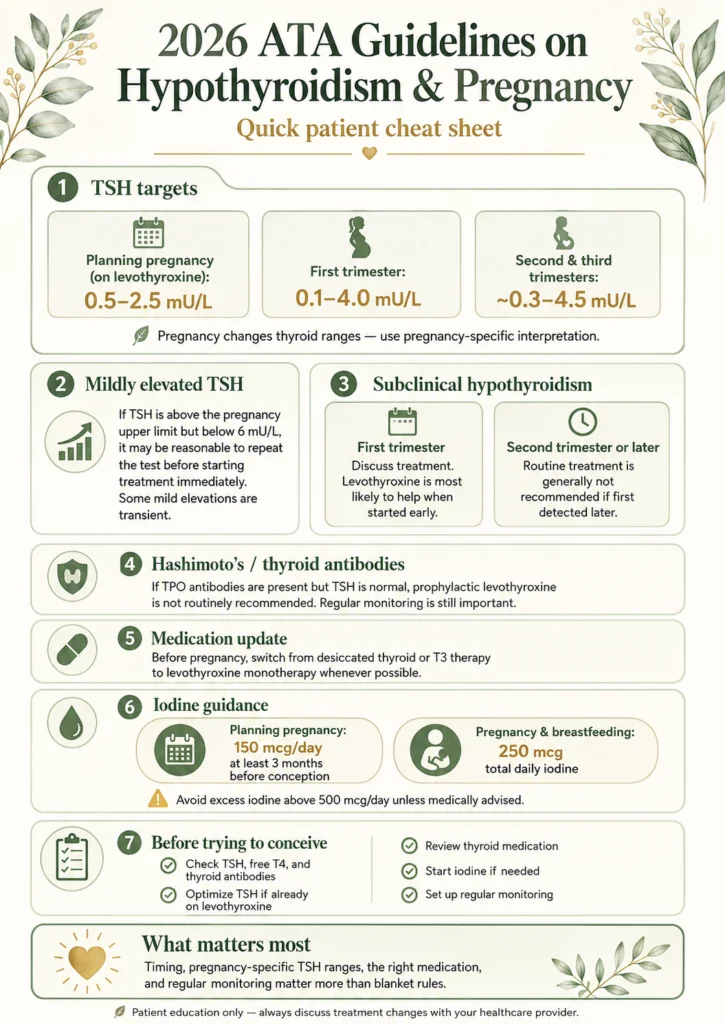
In many cases, this means aiming for a TSH below 2.5 mU/L before trying to conceive, especially if the person already has known hypothyroidism and is on thyroid medication.
This gives the body a stronger starting point before pregnancy increases thyroid hormone demands.
TSH Range in the First Trimester
In the first trimester, TSH can naturally run lower because of rising hCG.
The 2026 guidance recognizes that low TSH in early pregnancy is not automatically a sign of hyperthyroidism.
For many patients, this helps reduce unnecessary anxiety and overtreatment.
TSH Range in the Second and Third Trimesters
As pregnancy progresses, TSH interpretation changes again.
The body’s thyroid needs continue to shift, which is why repeat testing is often needed through pregnancy.
The key message is that thyroid results should be interpreted by pregnancy stage, not by the same reference ranges used outside pregnancy.
Does Every Mildly Elevated TSH Need Treatment During Pregnancy?
No. This is one of the most patient-friendly updates in the 2026 ATA guidelines.
Earlier approaches often treated a single elevated TSH reading as an automatic reason to start medication.
The updated approach is more careful.
If TSH is mildly elevated, especially below certain higher thresholds, it may be reasonable to repeat the test before starting treatment immediately. Mild TSH elevations can sometimes be temporary.
This matters because it can spare some women from medication they may not need, while still making sure persistent hypothyroidism is not missed.
When Should Subclinical Hypothyroidism Be Treated in Pregnancy?
Subclinical hypothyroidism means TSH is elevated, but free T4 remains normal.
This is common in pregnancy and has been debated for years.
The 2026 ATA guidelines place greater emphasis on timing.
First Trimester Treatment
Treatment is most likely to be helpful when subclinical hypothyroidism is detected in the first trimester.
This is because early pregnancy is a critical window for fetal brain development, and the baby depends heavily on maternal thyroid hormone in this stage.
If subclinical hypothyroidism is found in the first trimester, the decision to treat should be discussed with a healthcare provider. For some women, low-dose levothyroxine may be recommended.
The goal is not to overtreat. The goal is to support thyroid hormone levels when they matter most.
Second Trimester or Later
If mild subclinical hypothyroidism is first detected after the first trimester, routine levothyroxine treatment may not always be recommended.
Research has not consistently shown benefit when treatment begins later in pregnancy.
This is a major shift from blanket treatment approaches. It means the timing of diagnosis matters as much as the number itself.
What Do the Guidelines Say About Hashimoto’s and Pregnancy?
Hashimoto’s thyroiditis is an autoimmune thyroid condition where the immune system attacks the thyroid gland.
Many women with Hashimoto’s have thyroid antibodies, especially TPO antibodies.
In the past, there was debate about whether women with thyroid antibodies but normal thyroid function should be given levothyroxine to prevent miscarriage or improve fertility outcomes.
The updated answer is more reassuring.
If you have Hashimoto’s thyroiditis but your TSH is normal, you do not automatically need levothyroxine just because antibodies are present.
What you do need is regular monitoring.
Do Thyroid Antibodies Alone Mean You Need Levothyroxine?
No. Thyroid antibodies alone do not automatically mean levothyroxine is needed.
This is one of the most important clarifications for women with Hashimoto’s thyroiditis.
If a woman is euthyroid, meaning her thyroid function is normal, antibody positivity alone is not enough reason to start preventive thyroid medication.
However, antibody-positive women still need follow-up because thyroid function can change during pregnancy.
The message is not “ignore antibodies.”
The message is “monitor carefully, but do not medicate automatically.”
Should Thyroid Antibodies Still Guide Treatment Decisions?
Thyroid antibody status can still help with risk awareness and monitoring, but it is no longer the main driver of treatment decisions for every patient.
The updated approach looks at the full picture:
- TSH level
- Free T4 level
- Pregnancy stage
- Whether the abnormality persists
- Symptoms
- Medication history
- Patient preference
- Overall pregnancy context
This prevents unnecessary medication for patients who may not benefit from it, while still protecting women who truly need treatment.
Why T3 and Desiccated Thyroid Are Not Recommended Before Pregnancy
Women using desiccated thyroid extract or T3-based therapy should speak to their doctor before trying to conceive.
The preferred thyroid medication before and during pregnancy is levothyroxine, which is T4.
This matters because the fetal brain depends heavily on maternal T4 crossing the placenta. The body then converts T4 into T3 where needed.
T3 itself does not support fetal brain development in the same way because it does not cross into fetal brain tissue as effectively.
So if you are planning pregnancy and taking desiccated thyroid extract or liothyronine, this is something to discuss early with your healthcare provider.
Do not stop or switch thyroid medication on your own.
How Much Iodine Do Women Need Before and During Pregnancy?
Iodine is essential for thyroid hormone production.
During pregnancy and breastfeeding, iodine needs increase because thyroid hormone supports both maternal health and baby’s development.
The 2026 ATA guidelines place stronger emphasis on iodine sufficiency before conception and during pregnancy.
Women planning pregnancy may be advised to start iodine supplementation before conception, especially if their diet is low in iodine.
This may be particularly relevant for women who:
- Avoid dairy
- Do not use iodized salt
- Follow a vegan diet
- Live in an iodine-deficient region
- Have restricted diets
- Are planning pregnancy or breastfeeding
But more is not always better.
Excess iodine can also disrupt thyroid function. Supplementation should be discussed with a healthcare provider, especially for women with Hashimoto’s, thyroid disease, or those already taking thyroid medication.
What Should You Do Before Trying to Conceive?
The preconception period is one of the best times to optimize thyroid health.
If you have hypothyroidism, Hashimoto’s thyroiditis, thyroid antibodies, irregular cycles, infertility concerns, or a history of pregnancy loss, speak to your doctor about thyroid testing before trying to conceive.
Thyroid Tests to Discuss With Your Doctor
Your doctor may recommend checking:
- TSH
- Free T4
- TPO antibodies
- Thyroglobulin antibodies, if relevant
- Iodine status, if deficiency is suspected
Not everyone needs every test. But if you already have thyroid concerns, preconception testing can help avoid surprises later.
Optimize TSH Before Pregnancy
If you are already on levothyroxine, your doctor may adjust your dose before conception to bring TSH into the desired preconception range.
This is especially important because thyroid hormone requirements often increase during pregnancy.
Starting pregnancy with well-managed thyroid levels can make monitoring and dose adjustment smoother.
Review Your Thyroid Medication
If you are taking desiccated thyroid extract, Armour Thyroid, compounded thyroid medication, or T3 therapy, speak to your doctor before trying to conceive.
You may need to switch to levothyroxine before pregnancy.
This should be planned, monitored, and done under medical supervision.
Discuss Iodine Supplementation
Women planning pregnancy may need iodine support, but the right amount depends on diet, supplement use, location, and thyroid history.
Avoid high-dose iodine unless specifically prescribed.
More iodine does not mean better thyroid health.
Set Up a Monitoring Plan
If you have known thyroid disease or thyroid antibodies, ask your doctor how often your thyroid labs should be checked before and during pregnancy.
Some women may need testing every few weeks during early pregnancy, while others may need less frequent monitoring.
The point is to have a plan before pregnancy happens.
What These Guidelines Mean for Patients
The 2026 ATA guidelines on hypothyroidism and pregnancy are not about ignoring thyroid problems.
They are about treating the right people at the right time.
For patients, this means:
- A single mild TSH change may not always mean panic
- First trimester thyroid changes matter more than later mild changes
- Hashimoto’s antibodies alone do not always require medication
- Levothyroxine remains the preferred thyroid medication in pregnancy
- Iodine matters, but excess iodine can be harmful
- Preconception planning gives you more control
This is a more personalized and evidence-based way to approach thyroid care.
The Bottom Line
The 2026 ATA guidelines represent a meaningful shift toward individualized thyroid care during pregnancy.
They recognize that thyroid disease in pregnancy is not one-size-fits-all. Timing, TSH level, persistence of abnormal results, medication type, iodine intake, and individual risk all matter.
For women planning pregnancy, currently pregnant, or managing Hashimoto’s thyroiditis, the message is both practical and reassuring.
You do not need to panic over every thyroid number.
You do need the right testing, the right timing, and a healthcare provider who understands how thyroid needs change across preconception, pregnancy, and postpartum.
This article is for education only and should not replace medical advice. Always consult your healthcare provider before starting, stopping, or changing thyroid medication, iodine supplements, or any pregnancy-related treatment plan.

FAQs
What do the 2026 ATA guidelines say about hypothyroidism and pregnancy?
The 2026 ATA guidelines recommend more individualized thyroid care before and during pregnancy. They emphasize pregnancy-specific TSH interpretation, careful monitoring, and treatment decisions based on timing, TSH level, thyroid function, and patient context.
What should TSH be before pregnancy if you take levothyroxine?
For women already taking levothyroxine and planning pregnancy, many doctors aim for a TSH below 2.5 mU/L before conception. Your target may vary depending on your medical history, so this should be discussed with your healthcare provider.
Does Hashimoto’s mean I need thyroid medication during pregnancy?
Not always. If you have Hashimoto’s thyroiditis but normal thyroid function, you may not need levothyroxine just because antibodies are present. However, regular monitoring is important because thyroid needs can change during pregnancy.
Do thyroid antibodies increase pregnancy risk?
Thyroid antibodies may signal a higher risk of developing thyroid dysfunction during pregnancy, but antibody positivity alone does not always mean treatment is needed. The updated approach focuses on monitoring and treating when thyroid function actually changes.
Should subclinical hypothyroidism be treated during pregnancy?
It depends on when it is detected, how high TSH is, whether free T4 is normal, and the patient’s overall context. Treatment is most likely to be considered when subclinical hypothyroidism is detected in the first trimester.
Is levothyroxine safe during pregnancy?
Levothyroxine is the standard thyroid hormone replacement used during pregnancy when treatment is needed. It should be taken exactly as prescribed and monitored with regular thyroid testing.
Should women on T3 or desiccated thyroid switch before pregnancy?
Women taking T3 therapy or desiccated thyroid extract should speak to their doctor before trying to conceive. Levothyroxine is generally preferred because fetal development depends heavily on maternal T4.
How much iodine is needed during pregnancy?
Iodine needs increase during pregnancy and breastfeeding. Women planning pregnancy should discuss iodine intake with their healthcare provider, especially if they avoid dairy, do not use iodized salt, follow a vegan diet, or have thyroid disease.
Can too much iodine affect thyroid health?
Yes. Excess iodine can disrupt thyroid function, especially in people with underlying thyroid conditions. Iodine supplementation should be done thoughtfully and preferably under medical guidance.
What thyroid tests should I do before trying to conceive?
Common tests include TSH and free T4. Your doctor may also check thyroid antibodies such as TPO antibodies if Hashimoto’s or autoimmune thyroid disease is suspected.