
Celiac Disease: Symptoms, Diagnosis, Treatment and Gluten Sensitivity
Understanding celiac disease vs gluten sensitivity is essential because both can cause similar symptoms, but only celiac disease triggers an autoimmune response that can damage the small intestine.
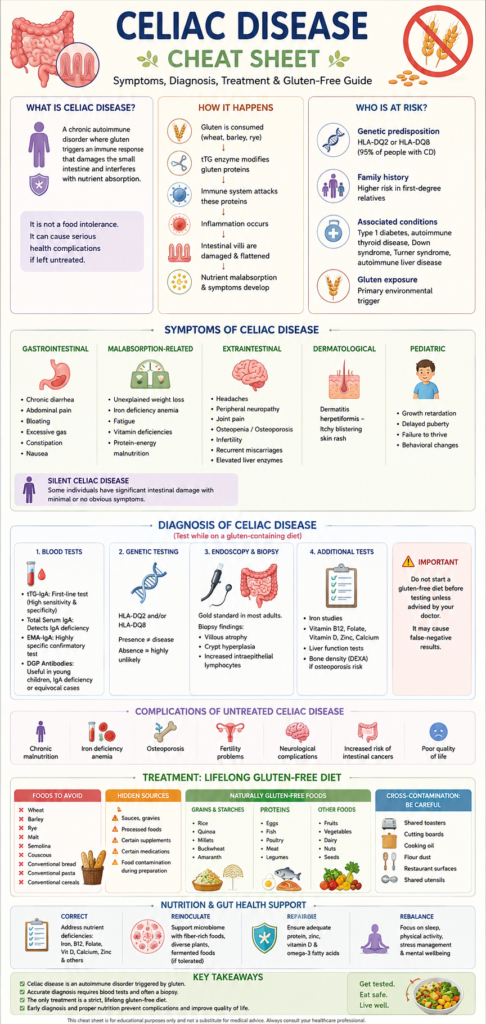
Celiac disease is a chronic autoimmune disorder in which eating gluten triggers an abnormal immune response that damages the lining of the small intestine. Understanding celiac disease symptoms and diagnosis is important because untreated intestinal damage can cause nutrient malabsorption, anaemia, osteoporosis and other systemic complications.
Celiac disease is different from food intolerance and non-celiac gluten sensitivity. While both conditions may cause symptoms after eating gluten-containing foods, celiac disease involves an autoimmune reaction and may cause villous atrophy in the small intestine.
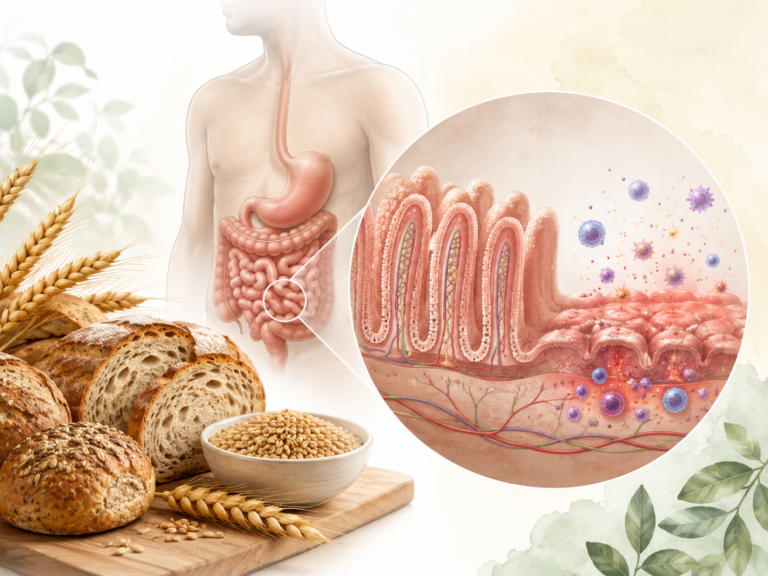
What Is Celiac Disease?
Celiac disease primarily affects genetically susceptible individuals carrying the HLA-DQ2 or HLA-DQ8 genes.
Unlike a food intolerance, celiac disease is an autoimmune condition. Gluten exposure activates the immune system, damages the small intestinal mucosa and reduces the body’s ability to absorb nutrients.
Keywords naturally included: celiac disease, autoimmune reaction to gluten, HLA-DQ2 and HLA-DQ8, nutrient malabsorption.
What Happens in the Body During Celiac Disease?
How Gluten Triggers an Autoimmune Reaction
When gluten is consumed:
- Gluten proteins enter the small intestine.
- Tissue transglutaminase modifies gluten peptides.
- The immune system mistakenly recognises these peptides as harmful.
- An inflammatory response develops.
- The intestinal villi become damaged and flattened.
Villous Atrophy and Nutrient Malabsorption
This damage, known as intestinal villous atrophy, reduces the absorptive surface of the small intestine. As a result, the body may struggle to absorb iron, vitamin B12, folate, vitamin D, calcium, zinc and other important nutrients.
Keywords naturally included: tissue transglutaminase, intestinal villous atrophy, nutrient malabsorption.
What Causes Celiac Disease?
H3: Genetic Predisposition
More than 95% of people with celiac disease carry:
- HLA-DQ2
- HLA-DQ8
However, approximately 30–40% of the population may carry one of these genes, while only a small proportion develops celiac disease. Genetic susceptibility alone is therefore not enough to cause the condition.
Gluten Exposure
Gluten is the primary environmental trigger in genetically susceptible individuals.
Gluten-containing grains include:
- Wheat
- Barley
- Rye
- Triticale
- Kamut
Family History and Associated Conditions
The risk of celiac disease is higher among first-degree relatives of someone with the condition.
It is also more common in people with:
- Type 1 diabetes
- Autoimmune thyroid disease
- Down syndrome
- Turner syndrome
- Autoimmune liver disease
What Are the Symptoms of Celiac Disease?
Celiac disease symptoms can affect the digestive system as well as several other parts of the body. Some people experience severe digestive symptoms, while others have subtle or no obvious gastrointestinal complaints.
Gastrointestinal Symptoms
- Chronic diarrhoea
- Abdominal pain
- Bloating
- Excessive gas
- Constipation
- Nausea
Symptoms Caused by Malabsorption
- Unexplained weight loss
- Iron deficiency anaemia
- Fatigue
- Vitamin deficiencies
- Protein-energy malnutrition
Extraintestinal Symptoms
- Headaches
- Peripheral neuropathy
- Joint pain
- Osteopenia
- Osteoporosis
- Infertility
- Recurrent miscarriages
- Elevated liver enzymes
Dermatitis Herpetiformis
Dermatitis herpetiformis is an intensely itchy, blistering skin rash associated with celiac disease. It commonly appears on the elbows, knees, scalp, back or buttocks.
Celiac Disease Symptoms in Children
Celiac disease in children may present with:
- Growth retardation
- Delayed puberty
- Failure to thrive
- Behavioural changes
- Abdominal swelling
- Nutritional deficiencies
Silent Celiac Disease
People with silent celiac disease may have significant intestinal damage despite experiencing minimal or no noticeable digestive symptoms.
The tTG-IgA test, or tissue transglutaminase IgA antibody test, is generally used as the first-line celiac disease blood test.
How Is Celiac Disease Diagnosed?
Celiac disease diagnosis usually involves antibody blood tests and, particularly in adults, an upper gastrointestinal endoscopy with a duodenal biopsy.
Testing must normally be completed while the person is still eating gluten. Removing gluten before testing can lower antibody levels and lead to false-negative results.
tTG-IgA Blood Test
The tTG-IgA test, or tissue transglutaminase IgA antibody test, is generally used as the first-line celiac disease blood test.
Its advantages include:
- High sensitivity
- High specificity
- Wide availability
Elevated tTG-IgA levels strongly suggest celiac disease but must be interpreted alongside clinical history and other investigations.
Total Serum IgA
Total serum IgA is tested to identify IgA deficiency. When IgA deficiency is present, the tTG-IgA result may be falsely negative.
Endomysial Antibody Test
The EMA-IgA test is highly specific and may be used to support the diagnosis when tTG-IgA results are borderline or unclear.
Total Serum IgA
Total serum IgA is tested to identify IgA deficiency. When IgA deficiency is present, the tTG-IgA result may be falsely negative.
Endomysial Antibody Test
The EMA-IgA test is highly specific and may be used to support the diagnosis when tTG-IgA results are borderline or unclear.
Deamidated Gliadin Peptide Antibodies
DGP antibody testing may be useful in:
- Young children
- People with IgA deficiency
- Equivocal cases
HLA-DQ2 and HLA-DQ8 Genetic Testing
Genetic testing evaluates the presence of HLA-DQ2 and HLA-DQ8.
Having either gene does not confirm celiac disease. However, the absence of both makes the condition highly unlikely.
Upper GI Endoscopy and Duodenal Biopsy
A celiac disease biopsy is considered the diagnostic gold standard for many adults.
A duodenal biopsy may show:
- Villous atrophy
- Crypt hyperplasia
- Increased intraepithelial lymphocytes
Additional Nutritional Investigations
Additional testing may include:
- Iron studies
- Vitamin B12
- Folate
- Vitamin D
- Zinc
- Calcium
- Liver function tests
A DEXA scan may also be advised when osteopenia or osteoporosis is suspected.
What Are the Complications of Untreated Celiac Disease?
Untreated celiac disease may lead to:
- Chronic malnutrition
- Iron deficiency anaemia
- Osteoporosis
- Fertility problems
- Neurological complications
- Persistent nutrient deficiencies
- Increased risk of certain intestinal malignancies
- Reduced quality of life
How Is Celiac Disease Treated?
The only proven celiac disease treatment is lifelong adherence to a strict gluten-free diet.
Even small or repeated amounts of gluten may trigger inflammation and intestinal damage, sometimes without causing immediate symptoms.
Foods to Avoid on a Gluten-Free Diet
People with celiac disease must avoid:
- Wheat
- Barley
- Rye
- Malt
- Semolina
- Couscous
- Conventional bread
- Conventional pasta
- Conventional breakfast cereals
Hidden Sources of Gluten
Hidden sources of gluten may include:
- Sauces
- Gravies
- Processed foods
- Supplements
- Certain medications
- Packaged seasonings
- Malt-containing products
Gluten Cross-Contamination
Gluten cross-contamination can occur through:
- Shared toasters
- Cutting boards
- Cooking utensils
- Shared frying oil
- Flour dust
- Restaurant preparation surfaces
- Shared serving spoons
For people with celiac disease, preventing cross-contamination is an important part of following a strict gluten-free diet.
Naturally Gluten-Free Foods
Naturally gluten-free foods include:
Grains and starches
- Rice
- Quinoa
- Millets
- Buckwheat
- Amaranth
Protein sources
- Eggs
- Fish
- Poultry
- Meat
- Legumes
Other foods
- Fruits
- Vegetables
- Dairy products
- Nuts
- Seeds
Nutritional Considerations on a Gluten-Free Diet
A healthy gluten-free diet for celiac disease should provide:
- Adequate protein
- Fibre-rich foods
- Sufficient iron
- Vitamin B12 and folate
- Calcium and vitamin D
- Zinc
- Nutrient-dense whole foods
Many packaged gluten-free products are highly processed, low in fibre and less nutrient-dense than naturally gluten-free foods.
Supportive Gut Health Strategies
Gut-supportive strategies may help nutritional recovery but do not replace strict gluten avoidance.
Correct Nutrient Deficiencies
Identify and correct deficiencies in iron, vitamin D, vitamin B12, folate, calcium, zinc or other nutrients.
Support Microbiome Diversity
Include, where tolerated:
- Fibre-rich foods
- Diverse plant foods
- Fermented foods
- Legumes
- Nuts and seeds
Support Intestinal Recovery
Ensure adequate intake of:
- Protein
- Zinc
- Vitamin D
- Omega-3 fatty acids
Support Overall Wellbeing
Address:
- Sleep
- Physical activity
- Stress
- Psychological wellbeing
What Is Non-Celiac Gluten Sensitivity?
Non-celiac gluten sensitivity refers to symptoms triggered by gluten-containing or wheat-containing foods in people who do not have celiac disease or wheat allergy.
It is not considered an autoimmune disease or an IgE-mediated allergic reaction.
Potential contributors may include:
- Innate immune activation
- Altered gut permeability
- Changes in gut microbiota
- Wheat fructans and other FODMAPs
- Other wheat proteins
This means that gluten may not always be the only substance causing symptoms.
What Are the Symptoms of Gluten Sensitivity?
Common gluten sensitivity symptoms include:
Gastrointestinal Symptoms
- Bloating
- Abdominal pain
- Diarrhoea
- Constipation
- Excessive gas
Extraintestinal Symptoms
- Fatigue
- Brain fog
- Headaches
- Joint pain
- Skin complaints
- Mood disturbances
Symptoms may develop within hours or days of eating gluten-containing or wheat-containing foods.
How Is Non-Celiac Gluten Sensitivity Diagnosed?
There is currently no validated blood test or biomarker for non-celiac gluten sensitivity.
Diagnosis generally involves:
- Ruling out celiac disease.
- Ruling out wheat allergy.
- Completing a supervised elimination diet.
- Reintroducing gluten or wheat systematically.
- Monitoring whether symptoms improve and return.
Celiac Disease vs Gluten Sensitivity: What Is the Difference?
The main difference between celiac disease vs gluten sensitivity is that celiac disease is an autoimmune disorder capable of damaging the small intestine. Non-celiac gluten sensitivity can cause similar symptoms but does not show the same celiac antibodies or characteristic villous atrophy.
| Factor | Celiac disease | Gluten sensitivity |
|---|---|---|
| Condition type | Autoimmune disorder | Non-autoimmune sensitivity |
| Intestinal damage | Villous atrophy may occur | Celiac-type damage is absent |
| Blood tests | Celiac antibodies may be positive | No validated biomarker |
| Genetic association | HLA-DQ2 or HLA-DQ8 | No confirmed genetic marker |
| Diagnosis | Blood tests and often biopsy | Diagnosis of exclusion |
| Diet | Lifelong strict gluten-free diet | Individual tolerance may vary |
| Cross-contamination | Strict avoidance required | Sensitivity may differ |

Frequently Asked Questions
What is the first test for celiac disease?
The tTG-IgA antibody test, together with total serum IgA, is commonly used as the first blood test for celiac disease.
Should I stop eating gluten before celiac testing?
No. Stopping gluten before testing can lower antibody levels and cause false-negative results. Speak to your doctor before changing your diet.
Can celiac disease occur without digestive symptoms?
Yes. Silent celiac disease and extraintestinal celiac disease may cause anaemia, fatigue, osteoporosis, fertility concerns or neurological symptoms without obvious digestive complaints.
Is celiac disease the same as gluten intolerance?
No. Celiac disease is an autoimmune condition that can damage the small intestine. “Gluten intolerance” is often used informally for non-celiac gluten sensitivity.
Does gluten sensitivity cause intestinal damage?
Non-celiac gluten sensitivity does not usually cause the characteristic villous atrophy found in celiac disease.
Is a gluten-free diet lifelong for celiac disease?
Yes. People with confirmed celiac disease require a strict gluten-free diet for life.
Conclusion
Understanding celiac disease symptoms and diagnosis is essential before removing gluten from the diet. Celiac disease is a chronic autoimmune condition that may damage the small intestine and requires lifelong adherence to a strict gluten-free diet.
Understanding celiac disease vs gluten sensitivity is equally important because the conditions may produce similar symptoms but require different diagnostic and dietary approaches.
Individualised nutrition care, accurate testing and long-term dietary support can help control symptoms, correct nutrient deficiencies and improve quality of life.