
Perimenopause Weight Gain: Why Diet and Exercise Stop Working Like Before
Perimenopause weight gain can feel especially frustrating when you’re eating the same way you always have, exercising regularly, and still noticing changes in your body.
Maybe you’ve even tightened things up. Cut back on portions. Added more cardio. Started watching what you eat more carefully.
And yet the scale keeps climbing, especially around your midsection.
If this sounds familiar and you’re somewhere in your late 30s to late 40s, perimenopause could be one of the factors contributing to these changes.
Your body is going through a hormonal transition, and the strategies that worked in your 20s and early 30s may need adjusting.
The answer isn’t necessarily eating less or exercising harder. It’s understanding what is changing and learning how to support your body through it.
What Is Perimenopause and Why Does It Affect Your Weight?
Perimenopause is the transitional phase leading up to menopause, when oestrogen and progesterone levels begin fluctuating.
It usually begins in the 40s, although some women notice changes earlier.
These hormonal fluctuations don’t just affect your periods or mood. They can influence your sleep, body composition, insulin sensitivity, and how fat is distributed throughout your body.
At the same time, ageing can bring gradual changes in muscle mass, activity levels, and energy expenditure.
Together, these changes help explain why maintaining your usual weight may become more difficult.
Is Perimenopause Weight Gain Caused by Hormones?
Hormones are part of the picture, but they aren’t the only explanation.
Research suggests that overall weight gain during midlife is strongly influenced by ageing, while declining oestrogen plays an important role in the redistribution of body fat toward the abdomen.
This means you may notice your waistline changing even when your overall weight hasn’t increased significantly.
Sleep, stress, muscle mass, dietary habits, and physical activity also influence how your body responds during this transition.

Why Does Belly Fat Increase During Perimenopause?
One of the most noticeable changes during perimenopause is an increase in abdominal fat.
You may find that your waistline is expanding even though your eating habits haven’t changed dramatically.
This happens partly because oestrogen influences where the body stores fat.
As oestrogen levels decline during the menopause transition, fat distribution tends to shift toward the abdominal region.
What Is Visceral Fat and Why Does It Matter?
Visceral fat is the fat stored deeper inside the abdomen, around internal organs.
Higher levels of visceral fat are associated with increased cardiometabolic risk, including insulin resistance, type 2 diabetes, and cardiovascular disease.
This is why perimenopause nutrition should focus on metabolic health and preserving muscle, rather than simply chasing a lower number on the scale.
What’s Actually Changing Inside Your Body?
Several changes may happen together during perimenopause, making weight management feel more challenging than before.
1. Insulin Sensitivity May Decline
Insulin helps your body move glucose from the bloodstream into cells for energy.
During the menopause transition, changes in body composition and oestrogen levels may contribute to reduced insulin sensitivity.
This means some women become more vulnerable to blood sugar fluctuations and insulin resistance.
You might notice:
Increased cravings
Energy dips after meals
More abdominal fat
Difficulty maintaining previous eating patterns
Greater hunger when meals are unbalanced
However, these symptoms alone don’t establish insulin resistance. Blood glucose testing and clinical assessment are needed when there is a concern.
2. Muscle Mass Gradually Declines
Muscle plays an important role in metabolism, strength, and blood sugar regulation.
As women age, muscle mass can gradually decline, particularly when resistance training and adequate protein intake aren’t part of their routine.
Hormonal changes during menopause may contribute to changes in body composition.
Less muscle can mean reduced strength and lower energy expenditure over time.
This is why simply adding more cardio may not be the most effective strategy.
Preserving and building muscle becomes increasingly important.
3. Stress and Cortisol Can Influence Weight Management
Many women enter perimenopause while managing demanding careers, family responsibilities, disrupted sleep, and years of accumulated stress.
Cortisol is a hormone involved in the body’s stress response.
Chronically elevated cortisol, particularly in certain medical conditions, can promote central fat accumulation. But everyday stress doesn’t automatically mean your cortisol levels are abnormally high.
Stress can also affect weight indirectly by influencing sleep, appetite, food choices, recovery, and physical activity.
The goal isn’t to eliminate cortisol. It’s to support healthier stress regulation and recovery.
4. Sleep Quality Often Declines
Sleep disturbances are common during perimenopause.
Hormonal fluctuations, night sweats, hot flashes, anxiety, and changes in mood can make it harder to fall asleep or stay asleep.
Poor sleep can affect appetite regulation, energy, food cravings, and your ability to stay active.
You may find yourself reaching for more caffeine, craving carbohydrate-rich snacks, or feeling too exhausted to exercise.
And over time, those patterns can make weight management more difficult.
Why Does Eating Less and Exercising More Stop Working?
The usual advice for weight loss is simple: eat less and move more.
While energy balance still matters during perimenopause, that advice can overlook important changes in muscle mass, sleep, appetite, and recovery.
Aggressively cutting calories may make it harder to consume enough protein and essential nutrients.
It can also leave you feeling exhausted and make an eating plan difficult to maintain.
Similarly, increasing high-intensity workouts without enough recovery may contribute to fatigue, injuries, and poor adherence.
This doesn’t mean calorie management or cardio is ineffective.
It means your approach may need to become more thoughtful.
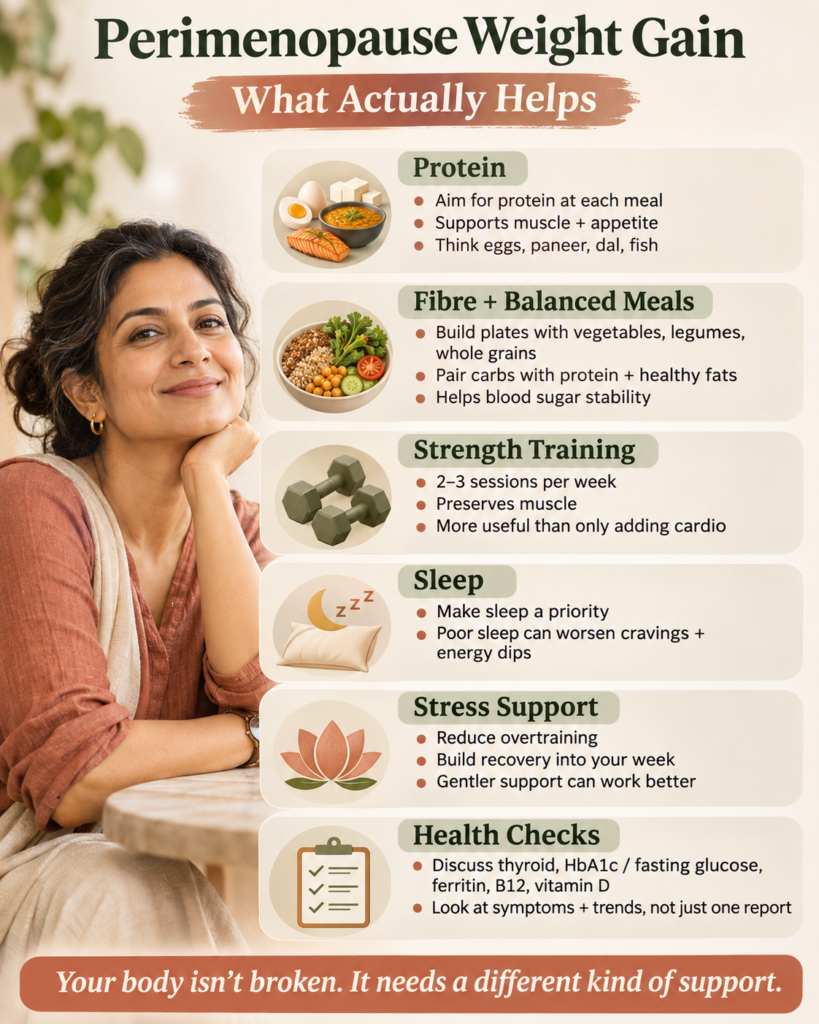
Rather than focusing only on eating less, focus on eating well, preserving muscle, moving consistently, and improving sleep.
What Is the Best Diet for Perimenopause Weight Gain?
The best perimenopause diet is one that supports muscle maintenance, metabolic health, bone health, and long-term consistency.
There is no single diet that works for every woman.
However, a few nutrition priorities can make a meaningful difference.
1. Prioritise Protein at Every Meal
Protein becomes increasingly important during midlife because it helps preserve muscle mass and supports satiety.
Some women may benefit from approximately 1–1.5 grams of protein per kilogram of body weight per day, depending on their activity, nutritional status, and health needs.
The right amount should be individualised, especially if you have kidney disease or another condition that affects protein requirements.
Good protein sources include:
Eggs
Paneer
Greek yoghurt and curd
Dal and lentils
Chickpeas and rajma
Tofu and edamame
Fish and chicken
Soy-based foods
Rather than eating most of your protein at dinner, try distributing it across your meals.
2. Increase Fibre-Rich Foods
Fibre supports digestive health, satiety, cholesterol management, and blood sugar regulation.
It also plays a role in gut microbial processes involved in oestrogen metabolism, although eating more fibre doesn’t automatically correct hormonal imbalances.
Include:
Leafy greens
Seasonal vegetables
Whole fruits
Lentils and legumes
Oats
Millets
Whole grains
Nuts and seeds
A varied, fibre-rich diet can support both gut health and metabolic health during perimenopause.
3. Include Healthy Fats
Healthy fats support normal cellular function and help your body absorb fat-soluble vitamins.
Choose sources such as:
Olive oil
Nuts
Seeds
Avocado
Fatty fish
Walnuts
Flaxseeds and chia seeds
The aim is not to eliminate dietary fat, but to prioritise unsaturated fats while keeping overall energy intake appropriate.
4. Don’t Eliminate Carbohydrates
Carbohydrates are not the enemy during perimenopause.
They provide energy for daily activity, exercise, and recovery.
What matters is the quality and composition of your meals.
Pair carbohydrates with protein, vegetables, and healthy fats.
For example:
Rice with dal, sabzi, and curd
Ragi roti with paneer and vegetables
Moong dal cheela with yoghurt
Oats with nuts and seeds
Sweet potato with eggs or tofu
This approach helps create balanced, satisfying meals without unnecessary restriction.
Which Blood Tests Should You Consider During Perimenopause?
Blood work can sometimes help identify conditions contributing to fatigue, weight changes, and other symptoms.
However, not every woman needs extensive hormone testing.
Perimenopause is often identified through age, menstrual changes, and symptoms rather than a single blood test.
Oestrogen and FSH levels fluctuate throughout this transition, making individual readings difficult to interpret.
Blood Tests Worth Discussing With Your Doctor
Depending on symptoms and medical history, your practitioner may recommend:
TSH: To investigate thyroid dysfunction when symptoms suggest it
HbA1c or fasting glucose: To assess blood sugar regulation
Lipid profile: To evaluate cholesterol and cardiovascular risk
CBC and ferritin: If fatigue, heavy periods, or iron deficiency are suspected
Vitamin B12: If dietary intake, symptoms, or risk factors suggest deficiency
Vitamin D: When testing is clinically indicated
Fasting insulin, cortisol, inflammatory markers, and reproductive hormone tests are not routinely necessary for every woman.
The important thing is to interpret relevant test results alongside symptoms, history, and lifestyle.
Which Supplements May Help During Perimenopause?
There is no universal supplement combination for perimenopause.
Your needs depend on your diet, health status, symptoms, medications, and any identified deficiencies.
Some supplements commonly discussed during this transition include:
Magnesium
Magnesium is involved in normal muscle, nerve, and metabolic function.
Supplementation may be useful when intake is inadequate, but evidence for treating perimenopausal sleep disturbances specifically is limited.
Omega-3 Fatty Acids
Omega-3s support cardiovascular health and can be useful when dietary intake of EPA and DHA is low.
They should not be viewed as a direct treatment for perimenopause weight gain.
Vitamin D
Vitamin D supports bone and muscle health.
Supplementation may be appropriate when levels are low or dietary and sunlight exposure are insufficient.
Creatine
Creatine has emerging research supporting its role in exercise performance and muscle-related outcomes, particularly when combined with resistance training.
However, evidence specifically for perimenopausal women remains developing.
Supplements should be selected according to individual needs rather than taken as a fixed routine.
What Is the Best Exercise for Perimenopause Weight Gain?
The most effective exercise approach combines resistance training, aerobic activity, and adequate recovery.
Prioritise Strength Training
Strength training is especially useful during perimenopause because it helps preserve muscle mass, improve strength, and support metabolic health.
Aim for two to three resistance training sessions per week, depending on your fitness level.
Exercises can include:
Squats
Lunges
Deadlifts
Rows
Push-ups
Resistance band exercises
Weight training
You don’t need to begin with heavy weights.
The goal is to build strength progressively and consistently.
Keep Cardio in Your Routine
Walking, cycling, swimming, running, or other aerobic activities continue to support cardiovascular fitness and energy expenditure.
You don’t need to replace cardio with strength training.
You need both.
Make Recovery Part of the Plan
If you’re constantly exhausted, sleeping poorly, or struggling to recover from workouts, increasing exercise intensity may not be the best first step.
Recovery, rest days, and manageable training loads help make your routine sustainable.
How Do Sleep and Stress Affect Perimenopause Weight Gain?
Sleep and stress management are not optional extras in a perimenopause health plan.
They influence your ability to eat consistently, stay physically active, recover from exercise, and regulate appetite.
A few supportive habits include:
Maintaining a consistent sleep routine
Keeping the bedroom cool if night sweats are an issue
Limiting caffeine late in the day
Including recovery days between demanding workouts
Practising yoga, breathing exercises, or mindfulness
Taking regular breaks from prolonged sitting
Seeking medical support for persistent sleep disturbances or hot flashes
If perimenopause symptoms are significantly affecting your quality of life, speak with a clinician about evidence-based treatments.
Lifestyle changes can help, but they don’t have to be your only option.
How to Build a Sustainable Perimenopause Weight Management Plan
Instead of changing everything at once, begin with a few manageable habits.
Start With Meal Structure
Build meals around protein, fibre-rich vegetables, carbohydrates, and healthy fats.
Choose foods you enjoy and can prepare consistently.
Introduce Regular Strength Training
Start with two manageable sessions per week and progress as your strength improves.
Monitor More Than Your Weight
Your body weight is only one measure.
You can also observe:
Waist circumference
Strength and fitness
Sleep quality
Energy
Hunger and cravings
Changes in clothing fit
Relevant health markers
Adjust as Your Body Changes
Your nutritional needs and exercise capacity may shift over time.
A plan should evolve with your symptoms, health, and lifestyle rather than remaining fixed.
The Bottom Line: Work With Your Body, Not Against It
Perimenopause weight gain is rarely explained by one factor alone.
Ageing, hormonal fluctuations, changes in body composition, sleep, stress, and lifestyle all contribute.
And while the body may respond differently during this phase, that doesn’t mean nutrition and exercise have stopped working.
It means your approach may need to evolve.
Prioritising protein, preserving muscle, choosing balanced meals, improving sleep, and managing stress can help you navigate this transition with greater confidence.
If you’ve been following the same routine for years and feel that your body is no longer responding, it’s worth looking more closely at what has changed.
Your body isn’t working against you.
It may simply need a different kind of support.

Frequently Asked Questions
Why am I gaining weight during perimenopause even though I eat healthy?
Perimenopause weight gain can be influenced by ageing, changes in energy expenditure, hormonal fluctuations, reduced muscle mass, sleep disturbances, and activity levels. Even with healthy eating habits, your energy requirements and body composition may change over time.
Does perimenopause cause belly fat?
Yes, the menopause transition is associated with changes in fat distribution. Declining oestrogen can contribute to increased abdominal fat, including visceral fat, even when overall body weight changes only slightly.
Does metabolism slow down during perimenopause?
Energy expenditure can decline during midlife, mainly due to ageing, changes in activity, and body composition. Hormonal changes may also influence fat distribution and metabolic health.
What foods should I eat to manage perimenopause weight gain?
Focus on protein-rich foods, fibre-rich vegetables, whole grains, fruits, legumes, and healthy fats. Meals built around protein, fibre, and balanced carbohydrates can support satiety and metabolic health.
Is cardio or strength training better during perimenopause?
Both are beneficial. Strength training helps preserve muscle mass and supports metabolic health, while cardio improves cardiovascular fitness and overall energy expenditure. A combination is generally more useful than either alone.
How much protein should I eat during perimenopause?
Protein requirements depend on body weight, activity, age, and medical conditions. Some women may benefit from approximately 1–1.5 grams per kilogram of body weight daily, particularly when physically active, but individual needs vary.
Can perimenopause cause insulin resistance?
The menopause transition may contribute to changes in insulin sensitivity, especially alongside increased abdominal fat. However, not every woman develops insulin resistance. Testing should be based on individual risk factors and clinical assessment.
Should I get hormone tests for perimenopause?
Not always. In otherwise healthy women aged 45 and above, perimenopause is generally identified through symptoms and menstrual changes. Hormone tests may be appropriate in younger women or when another condition is suspected.
Can supplements help with perimenopause weight gain?
No supplement is a reliable standalone solution for perimenopause weight gain. Vitamin D, omega-3s, magnesium, or creatine may be appropriate for specific nutritional or health needs, but they should be considered individually.
Can you lose weight during perimenopause?
Yes. Weight management remains possible during perimenopause. Sustainable nutrition changes, physical activity, strength training, adequate sleep, and individualised medical care can support better health and weight outcomes.