
Zero Trimester Nutrition for Men: Why Preconception Is Not Just a Woman’s Job
Zero trimester nutrition for men deserves more attention than it gets.
When we think about pregnancy preparation, we almost always think about the woman.
Prenatals. Ovulation tracking. Blood tests. Folate. Hormones.
Rarely do we think about the man.
And yet, conception is 50% his.
Half the genetic material in every embryo comes from sperm. And sperm health is shaped quietly and continuously by what a man eats, how he sleeps, how much he drinks, how much heat his body is exposed to, and how much stress he carries.
This is where the zero trimester for men becomes a conversation worth having.
What Is the Zero Trimester for Men?
The zero trimester is the window of preparation before pregnancy begins.
For women, this usually includes nutrition, cycle tracking, blood work, supplementation, and lifestyle changes before conception.
But the zero trimester is not only about the woman’s eggs.
It is also about the man’s sperm.
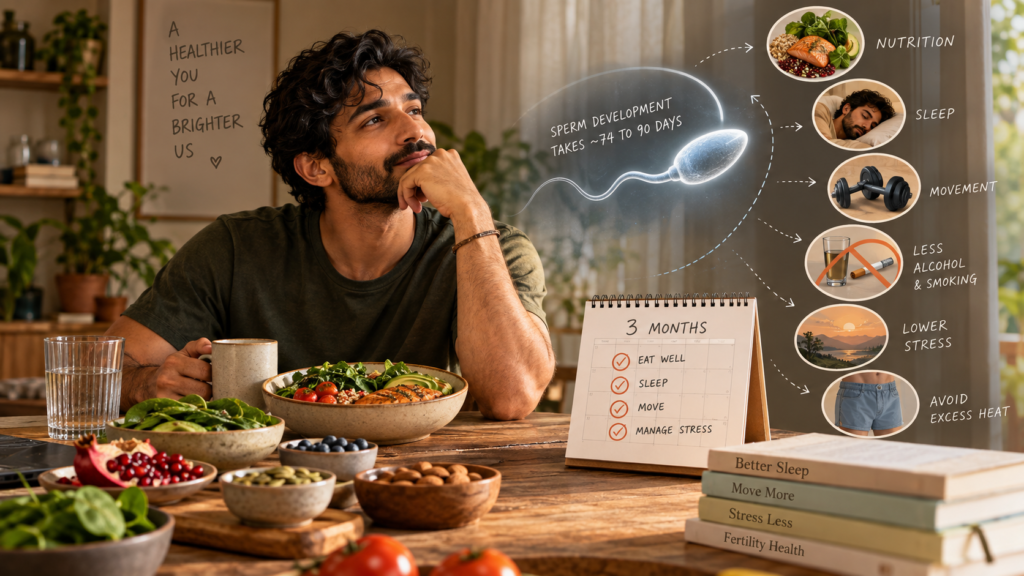
Sperm is not made on demand. It is produced continuously through a process called spermatogenesis. The full process takes around 74 days, followed by additional maturation time, which is why male preconception health is often discussed as a three-month window.
That means the sperm present at conception is not just a snapshot of today.
It reflects the last few months of food, sleep, alcohol, smoking, heat exposure, stress, illness, and lifestyle.
This is why male preconception nutrition is not a last-minute scramble.
It is a three-month foundation.

Why Male Preconception Health Matters
Male factors are involved in a significant share of fertility challenges, yet the conversation often begins with the woman.
When fertility teams assess sperm, they usually look at:
- Sperm count
- Sperm motility, or how well sperm swims
- Sperm morphology, or shape and structure
- Sometimes sperm DNA fragmentation, depending on the case
These markers can be sensitive to nutrient status, oxidative stress, inflammation, heat exposure, sleep, smoking, alcohol, and metabolic health.
The good news is that sperm regenerates continuously.
This means a man’s fertility picture is not completely fixed. It can respond to consistent nutrition and lifestyle changes over time.
Why the Three Months Before Conception Matter
The three months before conception matter because sperm development happens over time.
What a man does today may not fully show up in semen quality tomorrow. It may show up weeks later.
That is why the zero trimester for men should ideally begin at least three months before actively trying to conceive.
This window gives the body time to:
- Build healthier sperm
- Reduce oxidative stress
- Improve nutrient status
- Support testosterone and reproductive hormones
- Reduce heat-related sperm stress
- Improve sleep and recovery
- Build habits that are easier to sustain as a couple
Think of it less as pressure and more as preparation.
Nutrients That Support Sperm Health
Sperm production is nutrient-sensitive.
This does not mean every man needs a handful of supplements. It means the diet should be built to support sperm count, motility, morphology, DNA integrity, and antioxidant defence.
A systematic review and meta-analysis of randomized clinical trials found that some nutrients and supplements, including selenium, zinc, omega-3 fatty acids, and CoQ10, were associated with improvements in sperm quality parameters in studied populations.
Food first is still the best place to begin.
Zinc and Selenium for Sperm Health
Zinc and selenium are two important minerals for male fertility.
They support sperm production, antioxidant defence, and reproductive function.
Food sources of zinc include:
- Pumpkin seeds
- Oysters
- Meat
- Eggs
- Chickpeas
- Lentils
- Nuts and seeds
Food sources of selenium include:
- Brazil nuts
- Fish
- Eggs
- Meat
- Whole grains
Brazil nuts are especially rich in selenium, so they should be used thoughtfully rather than in excess.
Folate Is Not Only for Women
Folate is usually discussed as a woman’s preconception nutrient, but it also matters for men.
Folate supports DNA synthesis and cell division, both of which are relevant to sperm production.
Food sources include:
- Spinach
- Methi
- Kale
- Lentils
- Chickpeas
- Beans
- Asparagus
- Avocado
- Citrus fruits
For Indian meals, dal, chana, leafy greens, sprouts, and beans can make folate easier to include consistently.
The standard PMOS advice is often: “Lose 5–10% of your weight.” But for a woman already at a healthy weight, that advice can be harmful.
Omega-3 and CoQ10 for Sperm Quality
Omega-3 fatty acids help support cell membranes, inflammation balance, and sperm function.
CoQ10 supports mitochondrial energy production, which matters because sperm need energy to move.
Food sources of omega-3 include:
- Salmon
- Sardines
- Mackerel
- Anchovies
- Chia seeds
- Flaxseeds
- Walnuts
CoQ10 is found in small amounts in foods such as fish, meat, poultry, nuts, seeds, and some vegetables, but supplementation should be discussed with a practitioner if being considered.

Antioxidants for Sperm DNA Protection
Oxidative stress can damage sperm membranes and sperm DNA.
Antioxidant-rich foods help counter this.
Add more:
- Berries
- Pomegranate
- Citrus fruits
- Amla
- Dark chocolate, 70% or higher
- Lightly cooked tomatoes for lycopene
- Green tea
- Colourful vegetables
- Herbs and spices
The goal is not one “superfood.”
The goal is colour, variety, and consistency.
Lifestyle Factors That Can Affect Sperm Health
You can eat well and still quietly undermine sperm quality through everyday habits.
The good news is that many of these are adjustable.
1. Heat Exposure
Sperm production is heat-sensitive.
Research on underwear type found that men who reported usually wearing boxers had higher sperm concentration and total sperm count than men who did not, likely because tighter underwear can increase scrotal temperature.
Common heat exposures include:
- Tight underwear
- Laptops on the lap
- Hot tubs
- Saunas
- Heated car seats
- Very tight cycling gear for long durations
This does not mean a man has to live in fear of heat.
It means reducing repeated heat exposure during the three-month preconception window can be a sensible step.
2. Alcohol and Smoking
Smoking and regular alcohol intake can affect semen parameters and reproductive hormones.
For men actively preparing for conception, cutting down or avoiding smoking and reducing alcohol can be one of the clearer steps to support sperm health.
This is especially important when both partners are trying to improve fertility outcomes together.
3. Cannabis
The evidence around cannabis and male fertility is still evolving, but there are enough concerns around semen parameters and testicular function to make caution reasonable during active preconception planning.
Given the sperm development window, reducing or avoiding cannabis for at least three months before trying to conceive is the more careful approach.
4. Poor Sleep
Sleep affects reproductive hormones, recovery, metabolism, mood, and stress resilience.
A small controlled study published in JAMA found that one week of restricting sleep to five hours per night was associated with a daytime testosterone reduction in young healthy men.
Later research has been more mixed, so sleep should not be reduced to one testosterone claim alone. But consistent sleep is still one of the most practical foundations for male reproductive health.
Aim for:
- 7–9 hours of sleep
- Consistent sleep timing
- Morning light exposure
- Less late-night alcohol
- Less late-night scrolling
- A cool, dark bedroom
5. Chronic Stress
Chronic stress can affect sleep, food choices, inflammation, testosterone, libido, and overall health.
For men preparing for conception, stress management does not need to be complicated.
Useful tools include:
- Walking
- Strength training
- Breathwork
- Yoga
- Therapy or coaching if needed
- Better sleep routines
- Fewer skipped meals
- Time outdoors
Stress support is not soft advice.
It is part of reproductive health.
What Men Should Reduce During Preconception
The zero trimester does not require perfection.
But a few reductions can make a meaningful difference.
Reduce Sugar and Refined Carbohydrates
Frequent spikes in blood sugar and insulin can affect metabolic health, energy, and hormone balance.
Reduce:
- Sugary drinks
- Desserts every day
- Refined snacks
- Frequent bakery foods
- Sweetened cereals
- Excess fruit juice
Choose more:
- Whole fruit
- Dal
- Eggs
- Paneer
- Fish
- Chicken
- Nuts and seeds
- Vegetables
- Whole grains
Reduce Processed and Trans Fats
Processed fats and trans fats are linked with poorer overall metabolic health and may affect reproductive health indirectly.
Reduce:
- Fried packaged snacks
- Bakery shortening
- Fast food
- Deep-fried foods
- Ultra-processed snacks
- Reheated oils
Be Thoughtful With Excess Soy
Soy foods can be part of a healthy diet for many men.
The issue is not occasional tofu, edamame, or soy in a balanced meal.
The concern is very high, daily, concentrated intake, especially if the rest of the diet is poor or hormones are already a concern.
Balance matters.
Reduce Plastic Exposure Around Food
Some plastic chemicals can act as endocrine disruptors.
You do not need to panic, but you can reduce exposure by:
- Not heating food in plastic
- Using glass or steel containers
- Avoiding hot liquids in plastic bottles
- Reducing heavily packaged ultra-processed foods
- Choosing safer food storage when possible
Small changes add up.
A Practical Male Preconception Plate
A fertility-supportive plate for men should be simple enough to repeat.
Aim for:
Protein
Eggs, fish, chicken, paneer, dal, chana, rajma, tofu, curd, or lean meat.
Healthy Fats
Fatty fish, olive oil, ghee in moderation, nuts, seeds, avocado, walnuts, or flaxseeds.
Fibre and Colour
Leafy greens, tomatoes, carrots, beetroot, peppers, berries, pomegranate, citrus fruits, and seasonal vegetables.
Slow Carbohydrates
Rice, millets, sweet potato, oats, quinoa, or whole wheat roti, depending on tolerance and goals.
Fertility Add-Ons
Pumpkin seeds, Brazil nuts, pomegranate, dark chocolate, cooked tomatoes, and fatty fish can be rotated through the week.
Why Preconception Should Be a Shared Journey
The most powerful shift in preconception care is not asking men to do this alone.
It is asking couples to do it together.
When both partners improve nutrition, protect sleep, reduce alcohol, and build steadier habits at the same time, preconception stops feeling like a medical checklist aimed at one person.
It becomes a shared intention.
Practically, this also means both partners are more likely to follow through.
Habit change is easier when it is not happening in isolation.
If a couple is starting to think about a baby, the useful frame is this:
Her eggs and his sperm are both part of the story.
Starting together gives both of you a stronger foundation.
The Bottom Line
Zero trimester nutrition for men is not about blame.
It is about participation.
Sperm health is shaped over time by food, sleep, alcohol, smoking, heat exposure, stress, movement, and nutrient status.
And because sperm regenerates continuously, the three months before conception are an opportunity.
Not a guarantee.
Not pressure.
An opportunity.
For men, preconception care can begin with simple steps: eat more whole foods, include zinc and selenium-rich foods, get omega-3s, reduce alcohol and smoking, avoid repeated heat exposure, protect sleep, manage stress, and build the plan with your partner.
Pregnancy preparation was never meant to sit on one person’s shoulders.
It belongs to both of you.
FAQs
What is zero trimester nutrition for men?
Zero trimester nutrition for men refers to the diet and lifestyle preparation men can follow in the three months before conception to support sperm health, reproductive hormones, and overall fertility.
How long before trying to conceive should a man start preparing?
Ideally, at least three months before trying to conceive, because sperm development takes around 74 days plus maturation time. This means today’s habits may influence sperm quality over the next few months.
Can sperm quality improve naturally?
Yes. Sperm regenerates continuously, so nutrition, sleep, alcohol reduction, smoking cessation, stress management, and reducing heat exposure may support sperm quality over time.
What foods improve sperm health?
Foods that may support sperm health include pumpkin seeds, Brazil nuts, eggs, fatty fish, leafy greens, lentils, chickpeas, pomegranate, berries, cooked tomatoes, walnuts, flaxseeds, and colourful vegetables.
Which nutrients are important for male fertility?
Important nutrients include zinc, selenium, folate, omega-3 fatty acids, CoQ10, antioxidants, vitamin C, vitamin E, and protein.
Does tight underwear affect sperm count?
Tight underwear may increase scrotal heat, and some research has linked looser underwear with higher sperm concentration and count. During preconception, choosing looser underwear may be a simple supportive step.
Does alcohol affect sperm health?
Regular or heavy alcohol intake may affect semen parameters and reproductive hormones. Reducing alcohol during the three-month preconception window is a practical fertility-supportive step.
Does sleep affect male fertility?
Sleep supports testosterone, recovery, metabolism, stress regulation, and overall reproductive health. Poor or short sleep may negatively affect hormonal balance in some men.
Should men take fertility supplements before conception?
Not automatically. Supplements such as CoQ10, zinc, selenium, omega-3s, or antioxidants should be considered based on diet, semen analysis, health history, and practitioner guidance.
Is preconception only the woman’s responsibility?
No. Conception involves both egg and sperm. Male preconception health matters and should be part of the couple’s shared preparation.