
How to use lab results for a nutrition plan is something most people are never taught.
Most people get a lab report, scan for anything highlighted in red, and stop there.
If everything is “normal,” they tell themselves that whatever symptoms they are feeling must be in their head. If something is flagged, it becomes a source of quiet worry that never quite turns into a plan.
But a lab report is not a verdict.
It is data.
And data only becomes useful when it is translated into action.
This is one of the biggest gaps in how people approach their health. They collect information but never connect it to their plate, their routine, their symptoms, or the way they actually feel.
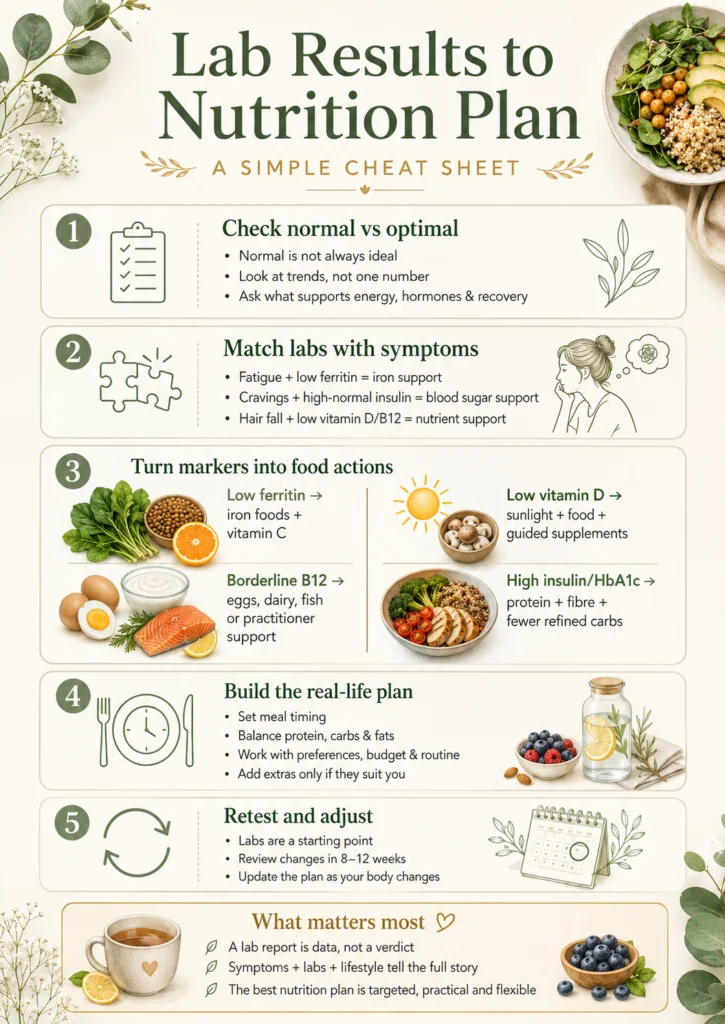
Here is a step-by-step approach to using lab results to create a nutrition plan that is more personal, practical, and rooted in what your body is asking for.
Why Lab Results Alone Are Not Enough
A lab report can tell you what is happening inside the body, but it does not always tell you why it is happening.
Low ferritin may point toward low iron stores, but the cause could be low intake, poor absorption, heavy menstrual bleeding, inflammation, pregnancy, or an underlying condition. Ferritin is used to assess the body’s iron stores, and low ferritin can be linked with iron deficiency and symptoms such as fatigue, especially in people at risk.
Similarly, blood sugar markers may look “normal” while insulin is already trending high. Thyroid markers may sit within the lab range while the person still feels tired, cold, sluggish, or weight resistant.
This is why nutrition planning should not be built from numbers alone.
It should be built from numbers, symptoms, history, and lifestyle together.

Step 1: Understand Normal Range vs Optimal Range
Every lab value comes with a reference range. But that range is built from a broad population, not from you.
“Normal” simply means your result falls somewhere within what is statistically common for that lab.
It does not always mean your levels are ideal for your energy, metabolism, recovery, hormones, or day-to-day wellbeing.
Take TSH, for example.
The normal reference range for TSH is often somewhere around 0.4 to 4.0 mIU/L, though this can vary depending on the lab and clinical context. But does that mean a TSH of 5 automatically tells the whole story, while a TSH of 3.8 means everything is perfect?
Not necessarily.
At Nutrition In Sync, we usually look at thyroid markers with a more functional lens. For many people, we prefer to see TSH sitting closer to an optimal range, often around 1–2 mIU/L, depending on the person’s symptoms, history, medication status, pregnancy status, and overall thyroid picture.
This is why someone can be told their iron, vitamin D, or thyroid markers are “within range,” yet still deal with fatigue, poor recovery, hair fall, brain fog, or stubborn weight.
The goal is not to panic over every number.
The goal is to ask: Is this value truly supporting how this person wants to feel and function?
Step 2: Correlate Lab Data With Symptoms
A lab report on its own is only half the picture.
The other half is what you are experiencing day to day.
Two people can have nearly identical reports and feel completely different. Two people can also have very different reports but similar symptoms.
Numbers alone cannot explain that gap.
Numbers read alongside symptoms usually can.
This is where a root-cause nutrition approach matters.
A symptom-only approach may treat what you feel without asking why it is happening.
A lab-only approach may treat the number without understanding what the person is experiencing.
But neither symptoms nor labs are enough on their own.
Together, they begin to tell a clearer story.
What Does a Root-Cause Nutrition Approach Look Like?
A root-cause approach asks what is driving both the symptom and the lab pattern.
For example:
Fatigue plus low ferritin plus heavy periods points toward iron loss, not just low iron intake. The plan is not simply “eat more iron.” It is iron-rich foods, absorption support, and understanding what is depleting iron in the first place.
Bloating plus normal thyroid labs plus a history of antibiotics or gut issues may point away from thyroid dysfunction and toward gut function, even if the initial worry was thyroid-related.
Cravings and energy crashes plus borderline fasting insulin may point toward blood sugar regulation, even if HbA1c is still within the normal range.
Hair thinning plus normal iron but low vitamin D or low protein intake may point toward a different nutrient gap entirely.
This is the real work of building a nutrition plan from lab results: matching what a person feels to what the data shows, then asking what upstream factor could be causing both.
Step 3: Match Each Lab Marker to a Nutrition Action
A lab report becomes useful only when each relevant marker is matched to a corresponding action.
The action does not always need to be extreme. In fact, it usually should not be.
The best nutrition plans are often built from targeted, sustainable changes.
If Ferritin Is Low
Ferritin reflects iron storage in the body. Low ferritin may suggest depleted iron stores, especially when paired with symptoms such as fatigue, weakness, hair fall, dizziness, or heavy periods.
A nutrition plan may include:
- Iron-rich foods such as red meat, lentils, beans, dark leafy greens, eggs, or seafood
- Vitamin C-rich foods with meals to support iron absorption
- Reviewing tea or coffee timing around iron-rich meals
- Checking whether heavy periods, gut issues, or inflammation may be contributing
The goal is not just to add iron. It is to understand why iron stores are low.
If Vitamin D Is Low
Vitamin D plays a role in bone health, immune function, muscle function, and overall wellbeing.
A nutrition plan may include:
- Safe sun exposure
- Fatty fish, eggs, or fortified foods where relevant
- Supplementation guided by a practitioner
- Rechecking levels after a defined period
Vitamin D should not be treated with a one-time supplement and forgotten. It needs follow-up.
If B12 Is Borderline
B12 is especially important for energy, nerves, red blood cell formation, and brain function.
A plan may include:
- Eggs
- Dairy
- Fish
- Meat or poultry, if eaten
- Targeted supplementation when needed
- Extra attention for vegetarian or plant-based diets
For vegetarians, B12 is often difficult to maintain through food alone, so monitoring matters.
If Fasting Insulin or HbA1c Is Trending High
A person can have “normal” blood sugar while insulin is already working harder than it should.
A nutrition plan may include:
- Protein at each meal
- Fibre-rich vegetables and whole grains
- Fewer refined carbohydrates
- Better meal spacing
- Avoiding long gaps that trigger cravings and blood sugar swings
- Strength training or regular movement, if appropriate
This is where meal timing and meal composition can make a big difference.
If Lipids Are Elevated
If cholesterol or triglycerides are elevated, the answer is not always “cut all fat.”
The plan depends on the full picture.
A nutrition plan may include:
- Reducing ultra-processed foods
- Increasing omega-3-rich foods
- Improving fibre intake
- Balancing carbohydrates
- Reviewing alcohol, sugar, sleep, stress, and activity
- Supporting overall metabolic health
If elevated lipids are paired with inflammation markers, insulin resistance, thyroid imbalance, or fatty liver risk, the plan needs to address the pattern, not just one number.
Step 4: Look at the Whole Lifestyle Picture
Labs and symptoms tell you the direction a plan needs to move in.
But direction alone does not make a plan work.
A few practical elements decide whether the plan actually survives day to day.
Meal Timing
Meal timing shapes how the body uses what you eat, not just what you eat.
Spacing meals to avoid long gaps, aligning bigger meals with more active parts of the day, and keeping a consistent eating window can influence blood sugar, energy, digestion, cravings, and mood.
For someone with energy crashes or cravings, meal timing may matter as much as food choice.
Macros
Macros should be built around the person, not copied from a fixed formula.
Height, weight, activity level, health goals, symptoms, lab markers, sleep, training, stress, and appetite all shift how much protein, carbohydrate, and fat someone actually needs.
A plan for a sedentary desk job will look different from a plan for someone training five times a week, even if their lab reports look similar.
Selective Add-Ons
Add-ons should be selective, not routine.
Something like apple cider vinegar, methi water, soaked nuts, or specific herbal supports may help some people with blood sugar, digestion, or appetite.
But they are not universal fixes.
They need to be introduced based on individual tolerance, gut sensitivity, medication use, and how the person responds.
Nothing should be added just because it worked for someone else.
Food Preferences and Real Life
Food preferences decide whether a nutrition plan survives contact with real life.
A technically perfect plan that ignores cultural staples, allergies, dislikes, budget, cooking skill, family routine, or work schedule rarely lasts beyond a week.
The best plan is the one a person can actually follow on a Tuesday evening after a long day.
Not just the one that looks ideal on paper.
The upper-normal TSH, paired with fatigue and weight resistance, is worth watching rather than dismissing.
Step 5: Build the Actual Nutrition Plan
Let’s take an example.
A 5’2” woman comes in with symptoms of stubborn weight, fatigue, sugar cravings, and hair thinning.
Her labs show:
- Fasting insulin on the higher end of normal
- Ferritin sitting low-normal
- Vitamin D insufficient
- TSH within range but trending toward the upper limit
There is no dramatic red flag anywhere on the report.
On paper, everything may look “fine.”
But when we read her symptoms and labs together, a pattern starts to form.
The stubborn weight and cravings line up with insulin resistance tendencies.
The fatigue and hair thinning line up with low ferritin and vitamin D.
The upper-normal TSH, paired with fatigue and weight resistance, is worth watching rather than dismissing.
Taking everything into consideration, her meal plan should support blood sugar stability, iron status, protein intake, thyroid support, energy, and consistency.
Sample Nutrition Plan Based on Lab Results
This is an example only. It is not a prescription.
Meal One: Fat First
A2 ghee, 1 tsp with warm water
This may help some people start the day gently, but it should be personalised based on digestion, appetite, lipid profile, and tolerance.
Meal Two: Breakfast, 9:00–9:30 AM
Options:
- Spinach omelette + avocado + boiled sweet potato
- Sourdough toast + mashed avocado + boiled edamame
- Almond flour pancakes
- Moong dal cheelas + coriander chutney
Why this works:
This breakfast pattern combines protein, fibre, healthy fats, and slow carbohydrates. It supports blood sugar stability and reduces the chance of mid-morning cravings.
Meal Three: Lunch, 12:30 PM
Options:
- Vegetable salad + barnyard millet khichdi
- Leafy greens + barnyard millet + lentils
- Zucchini sabzi + ragi roti + egg roast
- One-pot chicken vegetable rice
Why this works:
Lunch includes fibre, minerals, protein, and complex carbohydrates. It avoids a carb-only meal that may worsen energy crashes later in the day.
Meal Four: Evening Snack, 4:00 PM
Options:
- One whole fruit or 200 g fruit
- Mixed nuts and seeds
Why this works:
Pairing fruit with nuts and seeds can slow the glucose response and keep the snack more filling.
Meal Five: Dinner, 7:00–8:00 PM
Options:
- Methi matar + millet roti + dal
- Vegetable paneer wrap
- Chicken stew or grilled lemon fish with stir-fried vegetables
- Ragi dosa + egg bhurji + coconut chutney
Why this works:
Dinner stays balanced without being too heavy. It includes protein, fibre, and mineral-rich foods while still fitting familiar Indian meals.
Why This Plan Is Not Just a Diet Chart
This plan is not built around calories alone.
It is built around the pattern in the labs and symptoms.
For this example, the priorities are:
- Protein at every major meal
- Fibre for blood sugar and gut support
- Iron-rich foods for ferritin support
- Vitamin D follow-up and supplementation if needed
- Smart carbohydrates instead of carb restriction
- Anti-inflammatory whole foods
- Regular meal timing
- Retesting to track progress
That is the difference between a generic meal plan and a nutrition plan built from lab results.
Why a One-Time Plan Can Be Risky
A single lab value rarely tells you why something is happening.
It tells you what is happening.
Low iron could stem from diet, absorption issues, heavy menstrual cycles, inflammation, pregnancy, gut issues, or medication use.
Elevated blood sugar could reflect diet, stress, poor sleep, inactivity, or a combination of all three.
This is why lab results should never be read in isolation.
They need to be read alongside symptoms, history, lifestyle, and follow-up testing.
Why Retesting Matters
Many people are tested once, told their results are “fine,” and never tested again unless a new symptom appears.
Others are put on medication or strict dietary guidelines after one abnormal result, then continue the same approach for years without checking whether their body still needs it.
But nutrient status shifts.
Stress, seasons, training load, medications, menstrual cycles, pregnancy, gut health, infections, sleep, and diet can all move markers over time.
A nutrition plan is not something to build once and forget.
It should evolve as your labs and your body change.
The Bottom Line
Learning how to use lab results for a nutrition plan is about translating data into daily action.
A lab report should not leave you confused, dismissed, or anxious.
It should help you ask better questions.
What is low?
What is trending?
What is optimal for this person?
What symptoms match the data?
What lifestyle factor could be driving the pattern?
What food changes would actually help?
The goal is not to chase perfect numbers.
The goal is to understand your body clearly enough to support it better.
Your lab report is not the end of the story.
It is the beginning of a more informed plan.
This blog is for educational purposes only and is not a substitute for medical advice, diagnosis, or treatment. Always work with your doctor or qualified practitioner before changing medication, supplements, or treatment plans.

FAQs
How do you use lab results for a nutrition plan?
You use lab results for a nutrition plan by reading markers alongside symptoms, history, lifestyle, and food habits. Then each marker is matched to a practical action, such as increasing iron-rich foods for low ferritin or improving protein and fibre intake for blood sugar support.
Why do I have symptoms if my lab results are normal?
“Normal” lab results only mean your numbers fall within a broad reference range. They may not reflect your optimal range, trends over time, nutrient status, or how your body is functioning day to day.
What is the difference between normal range and optimal range?
A normal range shows what is statistically common in a broad population. An optimal range looks at what may support better function, energy, metabolism, hormones, and symptoms for an individual person.
Can nutrition improve lab results?
Nutrition can support many lab markers, including ferritin, vitamin D, B12, fasting insulin, HbA1c, lipids, and inflammation markers. However, the right plan depends on the cause of the imbalance and should be monitored with follow-up testing.
What labs are useful for building a nutrition plan?
Useful labs may include CBC, ferritin, vitamin D, B12, fasting glucose, fasting insulin, HbA1c, lipid profile, thyroid markers, liver enzymes, kidney markers, and inflammation markers, depending on symptoms and goals.
Is low ferritin linked to fatigue?
Low ferritin can reflect low iron stores and may be associated with fatigue, weakness, and other symptoms, especially in people at higher risk such as women with heavy menstrual bleeding or pregnancy.
Can blood sugar be a problem if HbA1c is normal?
Yes. HbA1c can still be normal while fasting insulin or post-meal blood sugar patterns suggest early blood sugar dysregulation. This is why symptoms like cravings, energy crashes, and stubborn weight should be read alongside multiple markers.
How often should you retest labs after changing your nutrition plan?
Retesting depends on the marker and the person. Some nutrient markers may be checked after 8–12 weeks, while others may need a different timeline. Your practitioner should guide the retesting schedule.
Should I start supplements based on lab results?
Not without guidance. Supplements can be useful when there is a clear need, but they should be matched to the lab result, symptoms, dosage needs, medication use, and follow-up testing.
Why is a one-time nutrition plan not enough?
A one-time plan can become outdated because labs, symptoms, stress, sleep, hormones, medications, and lifestyle change over time. A good nutrition plan should evolve with your body.