
Is this you?
Ambitious. Career first. Twelve-hour days, early mornings, always chasing the next win. It fuels you.
Then you catch your reflection and barely recognise the person looking back. Energy gone by 3 PM. Health slipping. The foundation cracking under everything you’ve built.
So you decide, this time is different.
Plan mapped out. Workouts scheduled. Groceries bought. Motivation high.
Then Day 1 hits. Meetings run till 7. No time to cook. By Day 3, you’ve ordered takeout twice and skipped the gym. The plan crumbles, you quit, and the old patterns win again.
Sound familiar?
Here’s what nobody says out loud: most health advice is written for people who don’t work 60-hour weeks.
It assumes time you don’t have.
The fix is not more discipline. It is a system that survives a bad week.
Not perfection. Just a sustainable meal planning framework that fits the life you actually live.
Why Meal Planning Fails for Busy Professionals
Meal planning often fails because it is too rigid, too idealistic, or too dependent on perfect days.
Most working professionals do not need a seven-day menu with complicated recipes. They need a few reliable staples, flexible meal combinations, and backup options for the days work takes over.
The goal is not to cook everything fresh every day.
The goal is to make healthy eating easier than ordering food by default.
Start With Strategic Grocery Shopping
Work smarter, not harder.
You don’t need an elaborate plan. You need a handful of reliable staples you can recombine endlessly.
Keep Reliable Proteins Ready
Protein is what keeps meals filling and helps reduce random snacking through the day.
Keep dry pulses on hand like moong dal, chana dal, chickpeas, and rajma. Add paneer if you eat dairy. Add fish, chicken, or eggs if you eat non-vegetarian food.
One pressure cooker batch of dal can anchor several days of meals.
Pick Four or Five Base Vegetables
Choose vegetables that are seasonal, affordable, and versatile.
Spinach, tomatoes, onions, bottle gourd, beans, carrots, peas, zucchini, capsicum, or whatever your local market has.
A Sunday batch of sabzi can become the base for lunch boxes, quick dinners, rice bowls, wraps, or one-pot meals.
Choose Simple Whole Grains
Keep rice, millets, atta, poha, oats, or rice noodles ready.
They are affordable, filling, and long-lasting. One batch of rice or millet can support everything from quick dal rice to a packed office lunch.
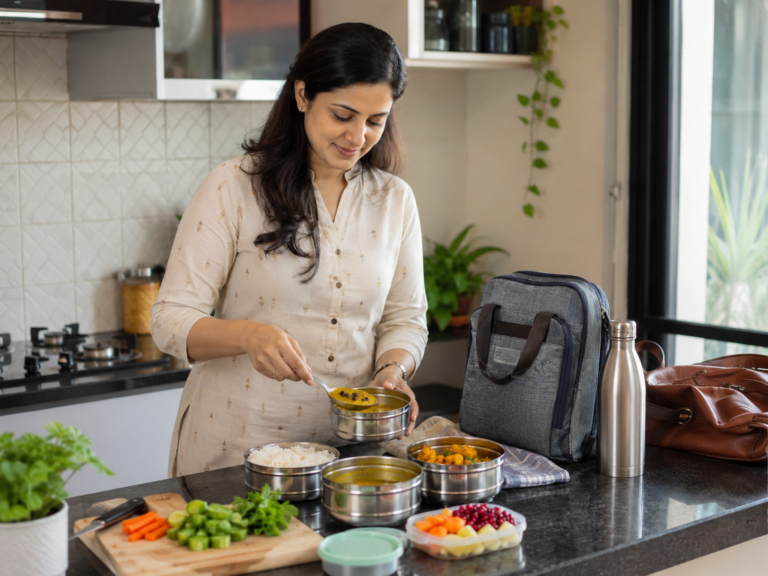
The Three-Component Meal Planning System
Forget rigid daily menus.
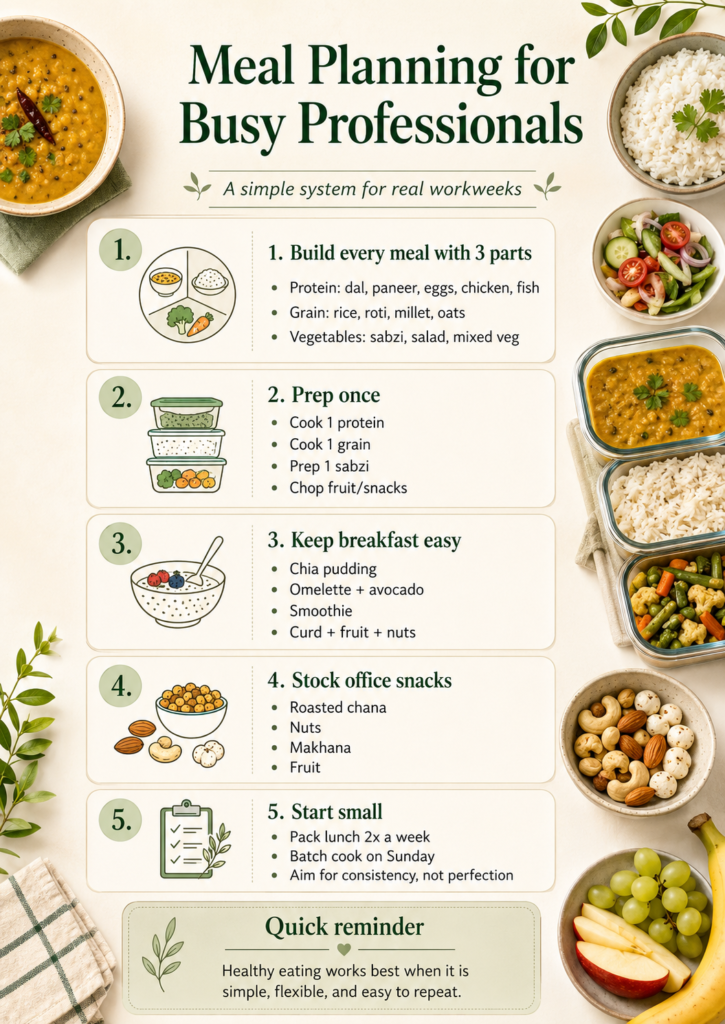
Build every main meal from three parts:
1. Protein
Dal, paneer, eggs, chicken, fish, chickpeas, rajma, tofu, or curd.
2. Grain
Rice, roti, millet, poha, oats, quinoa, or rice noodles.
3. Vegetables
Sabzi, stir-fried vegetables, salad, pressure-cooked mixed vegetables, or leafy greens.
Mix and match, and the same ingredients never feel the same twice.
For example:
Monday: Moong dal, spinach, and rice. A simple thali.
Wednesday: Palak pulao made from leftover spinach and rice, with eggs or chicken.
Friday: A one-pot chickpea meal that stretches into Saturday.
Different meals. Shared prep.
That is the heart of sustainable meal planning.
How to Meal Prep Once and Eat All Week
You don’t need to lose your whole weekend.
You need one focused hour.
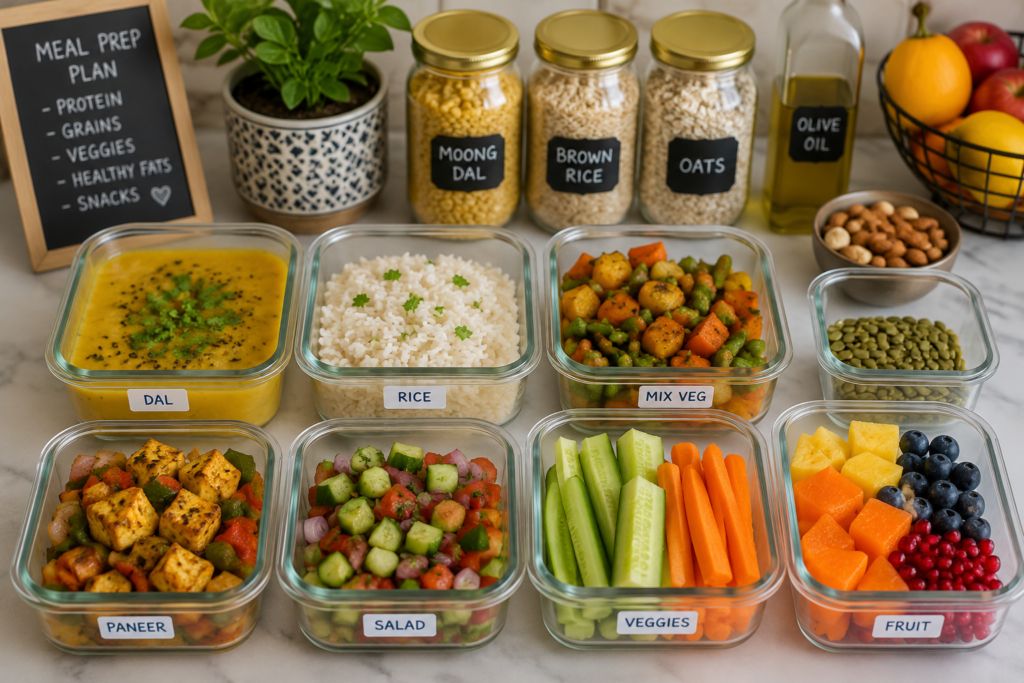
Prep One Protein
Cook a big batch of dal. Season it once, then vary it through the week.
Plain dal on Monday.
Dal with vegetables on Wednesday.
Dal rice or khichdi on Friday.
If you eat meat, marinate and freeze chicken or fish in portions. Then bake, air fry, or tawa-grill it when needed.
Cook One Sabzi Base
Pressure cook or stir-fry a mix of vegetables with seasoning you like.
You can use Indian flavours like ghee, jeera, ginger, garlic, and garam masala. Or keep it neutral with herbs, pepper, and olive oil.
One batch can pair with rice, roti, dal, eggs, paneer, or grilled chicken.
Put Breakfast on Autopilot
A dependable breakfast beats a perfect breakfast you are too tired to make.
Try:
- Chia seed pudding with yogurt, almonds, and pistachios
- Omelette with avocado
- Banana smoothie
- Boiled eggs
- Chicken muffins prepped over the weekend
- Curd, fruit, and nuts
The point is not variety every single day.
The point is one breakfast you can repeat when life is busy
Seed oils are not magic. But they are also not the villain they are made out to be.
Keep Grains Ready
Batch cook rice or millet for quick meals.
You can also make one-pot dishes like khichdi, tehri, chicken pulao, paneer pulao, or chickpea pulao.
These meals are especially useful when you need something warm, filling, and low-effort after a long day.
Use Frozen and Canned Options Without Guilt
Frozen peas, pre-cut vegetables, canned tomatoes, and canned beans can genuinely help you stay consistent.
Healthy eating does not have to mean doing everything from scratch.
Convenience is not the enemy.
The real issue is whether your convenience options support you or leave you more tired, hungry, and craving more.
Store Food Safely
Cooked dal, sabzi, and rice usually keep for three to four days in the refrigerator.
Rice should not be left at room temperature for long. Refrigerate what you will use in the next few days and freeze the remaining portions.
You still cook once.
You simply thaw what you need.
Healthy Eating at the Office
A busy workday needs a food plan too.
Stock Your Desk
Keep simple snacks at work so you are not dependent on the canteen or delivery apps at 3 PM.
Good options include:
- Roasted chana
- Nuts
- Dried fruit
- Roasted makhana
- Homemade laddoos
- Fruit
- Nut butter sachets
A small snack drawer can prevent the energy crash that leads to random ordering.
Order Smarter When Needed
You do not need to carry food every single day.
When ordering in or eating at the office cafeteria, look for meals built around protein, grain, and vegetables.
Examples:
- Dal rice
- Grain bowls
- Grilled chicken or fish
- Paneer with rice or roti
- Curd rice with cucumber
- Egg rice with vegetables
- Khichdi
- Simple thali
Better choices are usually available once you know what to look for.
Pack a Tiffin a Few Days a Week
You don’t need to pack lunch every day.
Even three or four days a week makes a difference.
It gives you structure without making your social life feel restricted. You still have room for lunches out with colleagues while eating better most of the time.
A Sample Meal Plan for Busy Professionals
This is not a rigid diet chart. Think of it as a flexible meal planning template.
Meal One: Fat First
6–7 soaked and peeled almonds
OR 1 tbsp coconut oil
OR 4–5 olives
Meal Two: Breakfast
Omelette with avocado
OR banana smoothie
OR chicken muffins prepped over the weekend
OR chia seed pudding prepared overnight
Meal Three: Lunch
Zucchini sabzi, dal, and rice
OR palak pulao with grilled chicken or fish
OR cucumber curd rice
OR egg fried rice with pressure-cooked mixed vegetables
Meal Four: Evening Snack
Fruit with soaked or roasted nuts
OR roasted makhana
Meal Five: Dinner
Zucchini sabzi, dal, and rice as lunch leftovers
OR paneer pulao with palak saag
OR grilled chicken with steamed peas and carrot salad
OR one-pot edamame or chickpea pulao
Start Small and Expect Setbacks
Sustainable eating is not about perfection.
Some weeks, takeout wins three nights in a row. You skip meal prep. Convenience food takes over.
That is normal.
Consistency and resilience matter far more than a flawless streak.
So pick one habit.
Master Sunday dal.
Pack lunch twice a week.
Batch cook one sabzi.
Keep one office snack ready.
Make breakfast automatic.
Let that become easy before adding the next habit.
The Bottom Line
Meal planning for busy professionals has to be realistic.
You don’t need a perfect diet. You need a food system that survives deadlines, meetings, travel, late nights, and low-energy days.
Start this Sunday.
Pressure cook a simple moong dal with turmeric and salt. Cook extra rice. Chop tomatoes and onions.
That is three days of nourishing meals, and the first brick in a system built to survive real life.
FAQs
How can busy professionals eat healthy with no time?
Busy professionals can eat healthier by using a simple system: batch cook one protein, one grain, and one vegetable base each week. This makes it easier to assemble quick meals without cooking from scratch every day.
What is the easiest meal prep for working professionals?
The easiest meal prep is cooking one dal or protein, one sabzi, and one grain like rice or millet. These can be mixed and matched through the week for lunches and dinners.
How do I meal plan if I work long hours?
Avoid rigid meal plans. Instead, keep flexible staples ready: dal, rice, sabzi, eggs, paneer, chicken, curd, fruits, nuts, and roasted snacks. This gives you quick options when your workday runs late.
What are healthy office snacks for busy professionals?
Healthy office snacks include roasted chana, nuts, fruit, roasted makhana, dried fruit, homemade laddoos, and yogurt if refrigeration is available.
Is meal prep healthy?
Meal prep can be healthy when it includes protein, vegetables, whole grains, and balanced fats. It also helps reduce last-minute dependence on takeout and ultra-processed snacks.
How many days can cooked meal prep last in the fridge?
Most cooked dal, sabzi, and rice can last three to four days in the refrigerator when stored properly. Extra portions can be frozen and thawed when needed.