
Sugar cravings, afternoon energy crashes, stubborn belly weight, and fatigue after meals are often early signs of insulin resistance, a condition that can develop quietly even when blood sugar looks normal.
This blog introduces a simple 60-day routine designed to support metabolic health through balanced meals, stable blood sugar, reduced inflammation, better sleep, and strength-building movement. Instead of extreme restriction, the focus is on giving the body the right signals so metabolism can begin working efficiently again.
For many women, these first 60 days become the turning point where energy steadies, cravings soften, and blood sugar control improves.

Cravings for sweets that feel hard to control.
Weight slowly settling around the abdomen despite eating “healthy.”
Afternoon energy crashes that leave you sleepy, irritable, and drained.
Over time, one might also observe cycles becoming irregular, skin breaking out (hormonal acne), and a quiet but persistent feeling that the body is simply not responding the way it used to.
These shifts are often early signals of deeper metabolic and hormonal changes, especially in women navigating PCOS symptoms, early insulin resistance, or underlying hormonal imbalance.
Darkening of the neck (acanthosis nigricans), skin tags, severe fatigue, brain fog, sleepiness after meals, and conditions such as hidradenitis suppurativa may also begin appearing.
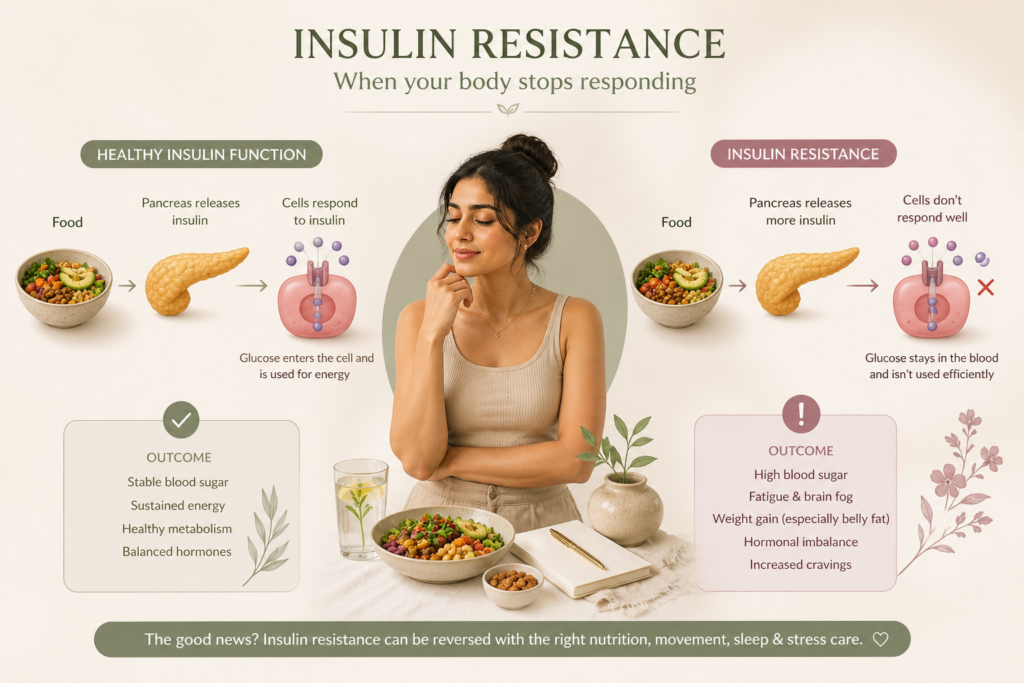
These signals often suggest that the way the body processes food has started to change. Even when you are eating well, the hormonal response to food may no longer be working efficiently. One of the key hormones involved in this process is insulin.
Insulin helps move glucose from the bloodstream into the body’s cells so it can be used for energy. When this system works well, energy stays stable and metabolism functions smoothly.
But when cells stop responding properly to insulin, the body begins producing more insulin to manage the same amount of glucose. Over time, this can influence appetite, fat storage, and energy levels, this is called insulin resistance.
In the early stages, blood sugar may still appear normal in routine tests while insulin levels quietly rise behind the scenes. This is why many women feel something is “off.”
In these situations, many women begin focusing only on controlling calories, but insulin resistance is not primarily a calorie problem. It is a metabolic signaling problem.
The first 60 days aren’t about restriction, they’re about teaching the body to feel safe enough to respond again.
Why Does the First 60 Days Matter?
When insulin resistance has been building for years, the body needs consistent metabolic signals before it begins responding differently.
The first 60 days often create the foundation for this shift. During this period, the focus is not extreme restriction. Instead, the goal is to:
• stabilize blood sugar
• reduce insulin spikes
• lower inflammation
• support muscle metabolism
• restore metabolic rhythm
For many women, this is when they begin to notice changes like steadier energy, fewer cravings, and improved metabolic response.

What to Focus on During the First 60 Days?
Here is a 10-step simple framework to focus on:
Start your morning with “Fat first”
Having a source of fat like coconut oil, ghee, nuts, seeds, olives, or nut butter helps regulate early insulin response and supports blood sugar control.
Have protein and fats for breakfast
This helps stabilize energy and reduces mid-day crashes.
Maintain carb to veggie ratio
A 1:2 or 1:3 ratio supports insulin sensitivity and reduces cravings.
Focus on balanced meals
Each meal should ideally contain:
• protein
• fiber-rich carbohydrates
• healthy fats
This approach aligns with a gut health diet, helping improve digestion and metabolic signaling.
Increase protein and fiber
Protein and fiber play a key role in:
• stabilizing blood sugar
• reducing cravings
• supporting digestive health and gut function
Have early dinners
Supports overnight metabolic repair and reduces late-night sugar cravings.
Reduce inflammation
Avoid ultra-processed foods, refined sugars, and inflammatory oils.
Include:
• healthy fats (nuts, seeds, coconut, eggs)
• colorful vegetables and fruits
• spices like turmeric, ginger, cinnamon
These help support metabolic health and reduce oxidative stress.
Reduce ultra-processed foods
Even small reductions improve insulin sensitivity.
Support sleep and stress regulation
Sleep and cortisol regulation are critical for hormone balance and insulin function.
The Missing Link: Movement
Muscle mass plays a powerful role in glucose regulation.
Aim for:
• resistance training 2–3 times per week
• regular walking
Movement improves how the body responds to insulin.
If along with insulin resistance you’re also experiencing bloating, irregular digestion, or discomfort after meals, supporting the gut alongside these changes can make the process feel much smoother, often starting with a structured, short-term reset to help restore balance.
Final Thoughts
Insulin resistance can feel frustrating, especially when symptoms persist despite effort, but the body is often far more responsive than we realize when it receives the right signals.
The first 60 days are not about perfection or extreme restriction. They are about creating consistent metabolic support through balanced meals, stable blood sugar, reduced inflammation, and stronger muscles.
When these foundations are in place, many women begin to notice something important:
Energy feels steadier.
Cravings soften.
And the body begins responding again.
Your body is not working against you. Often, it is simply waiting for the right signals – nourishment, movement, rest, and rhythm – to begin working with you again.
And when patterns like insulin resistance, PCOS, or deeper hormonal imbalances are involved, having the right guidance can help you understand your body more clearly and move forward with confidence, something we focus on through personalised, root-cause approaches at Nutrition in Sync.