Skip to content
Most people say, “I have a thyroid issue.” But that statement is vague. It does not explain what is happening inside the body, why it is happening, or what truly influences long term outcomes in thyroid health and thyroid disorders.
Not all thyroid conditions are the same. Hypothyroidism and Hashimoto’s thyroiditis, one of the most common forms of autoimmune thyroid disease, may look similar on routine lab reports and share symptoms, yet their underlying mechanisms are very different. While medication helps regulate thyroid hormone levels, it does not address immune dysfunction in autoimmune cases like Hashimoto’s disease.
Understanding this distinction changes how we think about long term management, symptom persistence and recovery.
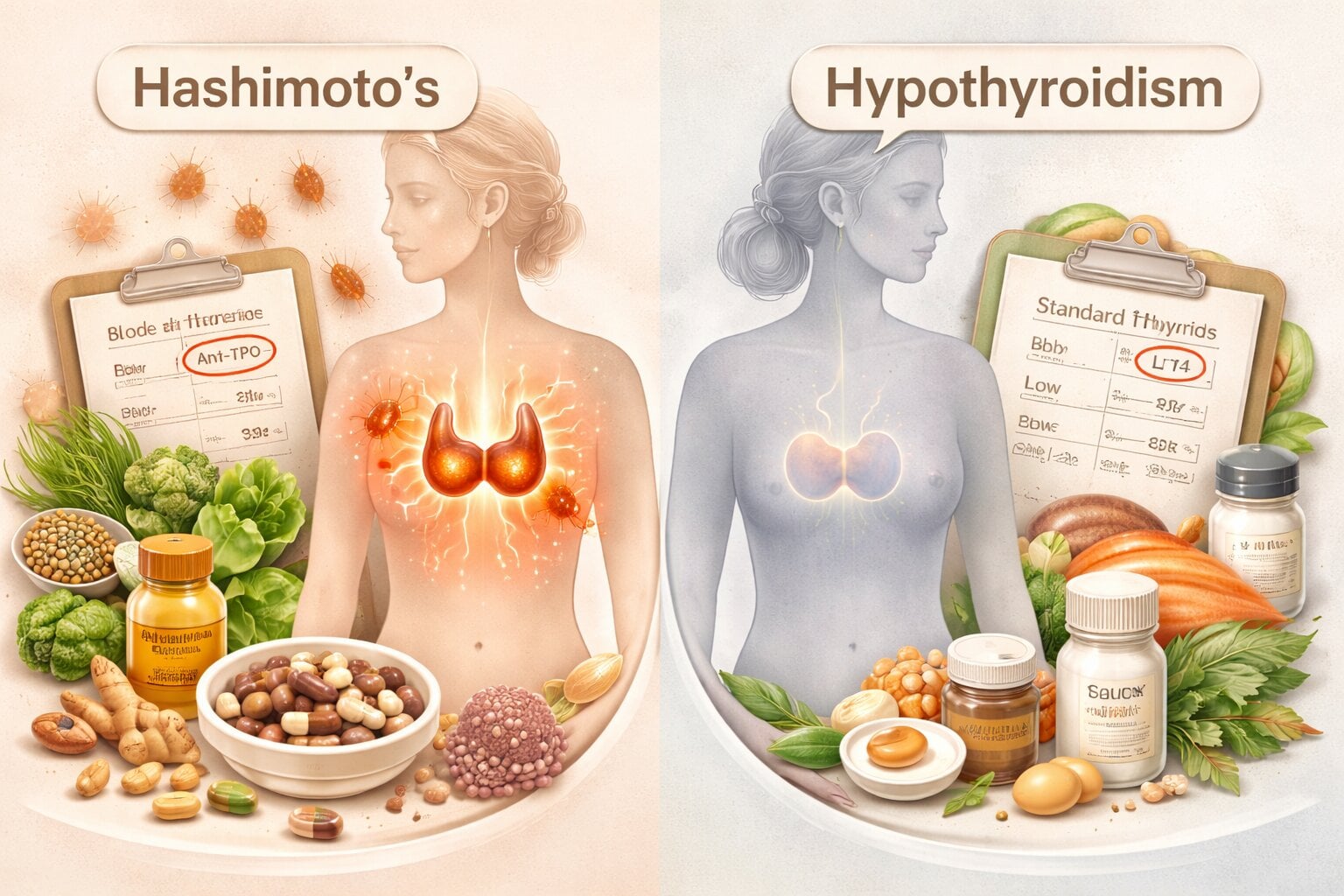
When Someone Says “I Have Thyroid”
In most cases, people mean hypothyroidism, an underactive thyroid gland. But not all hypothyroidism is identical.
One of the most misunderstood differences in thyroid health and thyroid disorders is the distinction between regular hypothyroidism and Hashimoto’s thyroiditis, the most common cause of autoimmune hypothyroidism.
They may appear similar on blood reports. They may share fatigue, weight gain or hair thinning, common thyroid symptoms. But underneath, they are fundamentally different conditions. And that difference matters.
What Is Regular Hypothyroidism
Hypothyroidism simply means the thyroid gland is not producing enough thyroid hormones, T3 and T4, often reflected through an elevated TSH blood test.
This can happen due to:
Iodine deficiency
Post thyroid surgery
After radioactive iodine therapy
Certain medications
Postpartum thyroid changes
Age related thyroid decline
In these cases, the thyroid underperforms, but the immune system is not attacking it.
Treatment is usually straightforward. Replace the missing hormone with levothyroxine, monitor TSH levels, and adjust dosage as required. Many individuals stabilise well with medication and supportive lifestyle practices for thyroid health.
Here, the problem is reduced hormone production. The immune system is not the driver.
Over time, this immune attack damages thyroid cells and reduces hormone production. Many individuals with Hashimoto’s eventually develop hypothyroidism, but the root cause is immune dysfunction and chronic inflammation.
What Is Hashimoto’s Thyroiditis
Hashimoto’s is an autoimmune thyroid condition. The immune system mistakenly identifies thyroid tissue as a threat and begins attacking it.
Over time, this immune attack damages thyroid cells and reduces hormone production. Many individuals with Hashimoto’s eventually develop hypothyroidism, but the root cause is immune dysfunction and chronic inflammation.
This is the critical distinction.
In regular hypothyroidism, the gland is underactive.
In Hashimoto’s, the gland is under immune attack.
Autoimmunity is systemic. The thyroid is simply the primary target. When the immune system is involved, management goes beyond hormone replacement and often involves addressing inflammation, gut health and immune balance.

Why Most People Do Not Realise the Difference
In conventional care, both conditions are often treated similarly. Prescribe thyroid hormone and monitor TSH.
If TSH normalises, the case is considered managed.
But in Hashimoto’s, thyroid antibodies may continue rising even when TSH appears normal. The autoimmune process may remain active.
This is why many individuals are told, “Your reports are normal,” yet they still experience fatigue, brain fog, hair fall, weight changes or mood shifts, common Hashimoto’s symptoms in women.
Medication replaces hormones. It does not calm autoimmune activity.
Stress, infections, gut imbalances, and nutrient deficiencies can all trigger antibody fluctuations. Without monitoring thyroid antibody tests, the immune story remains invisible.
The Role of Antibodies
The main markers that differentiate Hashimoto’s from regular hypothyroidism are thyroid antibodies, especially:
Anti TPO antibodies
Anti TG antibodies
If these antibodies are elevated, it indicates autoimmune thyroid activity.
In non autoimmune hypothyroidism, antibodies are usually absent.
Unfortunately, many individuals are never tested for thyroid antibodies or autoimmune thyroid disease markers. They are diagnosed with hypothyroidism without knowing whether autoimmunity is involved.
This is one of the biggest blind spots in thyroid diagnosis and thyroid care.

Symptom Patterns: Subtle Differences
Both conditions share common symptoms of thyroid imbalance:
- Fatigue
- Cold intolerance
- Weight gain
- Constipation
- Dry skin
- Hair thinning
But Hashimoto’s often presents with additional patterns:
- Fluctuating symptoms
- Temporary phases of anxiety or palpitations
- Stronger association with gut health issues and IBS
- Family history of autoimmune disease
- Persistent symptoms despite normal TSH blood test
Without antibody testing, these fluctuations may seem confusing or unexplained.
Why Lifestyle Matters More in Hashimoto’s
In iodine deficiency or post surgical hypothyroidism, lifestyle supports recovery. In Hashimoto’s, lifestyle becomes central to managing autoimmune thyroid disease.
Immune triggers may include:
- Chronic stress
- Gut permeability
- Low selenium, zinc, vitamin D or iron
- Blood sugar instability
- Environmental toxin exposure
While medication replaces hormones, nutrition and lifestyle strategies may help reduce inflammatory burden and support immune balance and thyroid function.
This is why some individuals with Hashimoto’s feel significantly better when gut health, stress regulation and micronutrient deficiencies are addressed, even if their medication dose remains the same.
Practical Management Principles
If you have hypothyroidism or Hashimoto’s, medication may be necessary. But daily habits strongly influence symptom control and long term outcomes in thyroid health management.
Prioritise selenium rich foods such as one to two Brazil nuts daily, sunflower seeds, eggs, mushrooms and fish. Avoid high dose supplements without testing.
Use iodised salt appropriately, as iodine is essential for thyroid hormone production. Do not eliminate it unnecessarily.
Support gut health with fibre rich vegetables, healthy fats and reduced intake of ultra processed foods and refined sugar.
Stabilise blood sugar by avoiding skipped meals and pairing carbohydrates with protein.
Ensure adequate protein at each meal, as thyroid hormones require protein for effective thyroid hormone utilisation and metabolism.
Manage stress consistently through regular movement, consistent sleep timing and calming practices such as breathing exercises.
The Bigger Picture
The goal is not to cure the thyroid overnight. It is to reduce immune triggers, support thyroid tissue, optimise nutrient status and improve quality of life.
When immune activity calms, thyroid tissue is attacked less. When thyroid tissue is attacked less, hormone balance becomes easier to maintain.
Your thyroid is not failing you. Often, it is responding to inflammation, stress and overload.
Support does not always begin with increasing medication. Sometimes it begins with reducing the burden the body is carrying.
When nutrients are sufficient, conversion improves.
When blood sugar stabilises, energy steadies.
When the gut is supported, immune signals soften.
If you have been diagnosed with “thyroid” but still do not feel like yourself, it may be worth asking one simple question:
Was I tested for thyroid antibodies?
Because sometimes what looks like a simple hormone imbalance is actually an autoimmune thyroid condition like Hashimoto’s thyroiditis waiting to be addressed.