Skip to content
You can eat clean. You can cut gluten. You can increase fiber. You can do everything “right.”
And still feel bloated.
This is where most people get confused.
Digestion is not controlled by food alone. It is regulated by your nervous system, hormones, stress load and how safe your body feels. This blog looks at digestive health and gut health from that lens and explains why improving digestion is not always about removing more foods or following another strict gut health diet.

When You’re Doing Everything Right… But Still Uncomfortable
In practice, I often see people who are extremely disciplined with food. Balanced meals. Good ingredients. Adequate protein. Enough fiber.
Yet the bloating stays. Or constipation. Or acidity.
And then the response becomes: maybe I need to remove more. Maybe dairy. Maybe gluten. Maybe beans. Maybe fruit.
At some point, the diet becomes smaller and smaller. But the symptoms do not fully leave.
That is usually the moment we have to look beyond the plate.
Because digestion depends not just on what you eat, but on the state your body is in when you eat it.
When you are stressed, rushed, anxious, underslept or constantly thinking about food rules, the body shifts into protection mode. In that state, digestion is not a priority.
Digestion Is a Nervous System Event
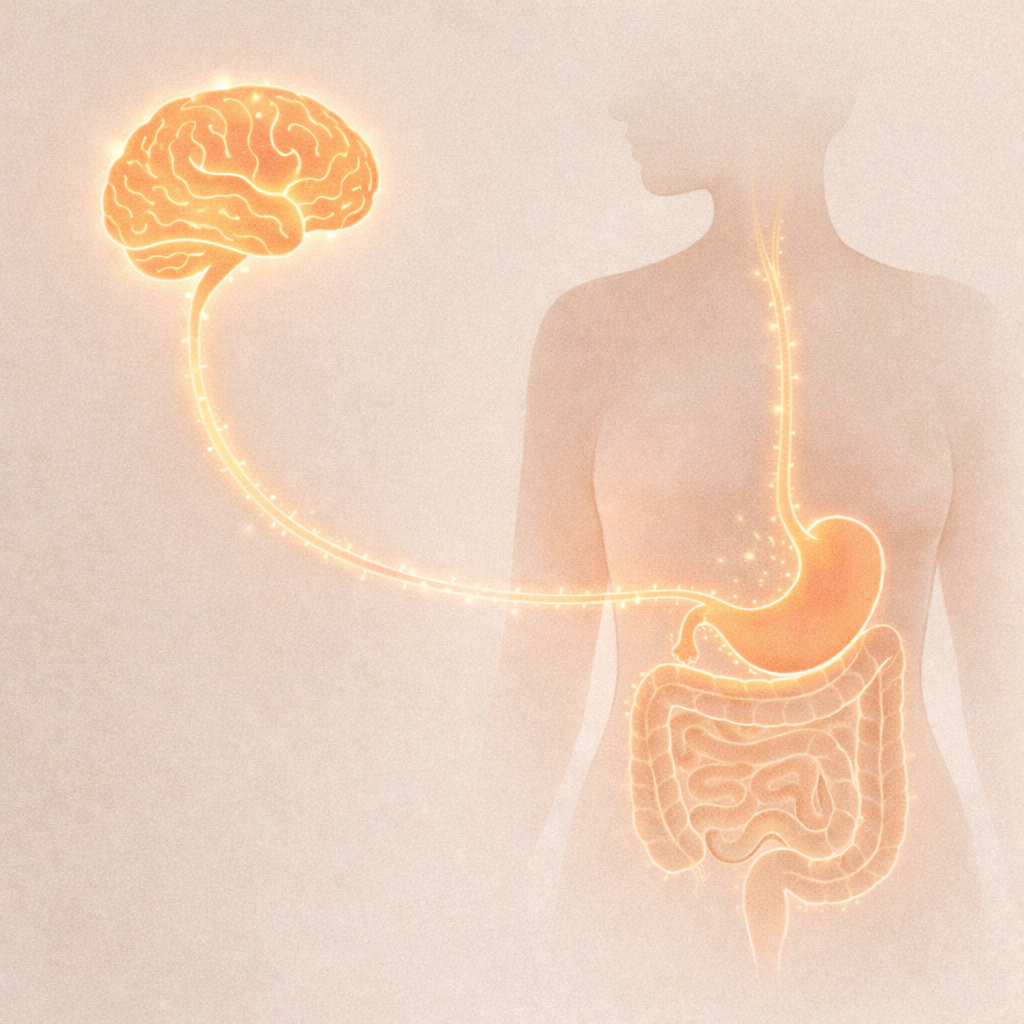
Your gut is not working in isolation. It is in constant communication with your brain.
Stomach acid, enzyme release, bile flow, gut movement, even how sensitive your gut feels, all of it depends on nervous system state and the balance of your gut microbiome.
When you are calm, digestion works better.
When you are stressed, rushed, anxious, underslept or constantly thinking about food rules, the body shifts into protection mode. In that state, digestion is not a priority.
And the body does not care whether the stress is emotional, work related or coming from food fear. Stress is stress.
This is why someone can eat khichdi and still feel bloated. Not because khichdi is wrong. But because the system is not ready.
This pattern is common in people struggling with IBS treatment, recurring leaky gut concerns, or persistent bloating relief attempts that never fully resolve.
Why Cutting More Foods Often Backfires
Elimination can be useful. But only when done strategically and temporarily.
What I often see instead is chronic restriction. Remove one thing. Then another. Then another.
The nervous system becomes hyper aware of food. Meals become stressful. There is fear of symptoms before eating even begins.
That fear alone can reduce digestive capacity.
Over time, people notice something strange. Even “safe” foods start causing discomfort. Symptoms shift. Bloating turns into constipation. Constipation turns into loose motions.
That is usually not because the body suddenly cannot tolerate everything. It is because the system has stayed in protection mode for too long.
Restriction without regulation rarely solves the problem, even when someone is following a strict SIBO diet, a low FODMAP plan, or experimenting with multiple versions of a gluten free diet program.
Symptoms Are Often Protective, Not Random
Bloating can reflect slowed gut movement. Constipation can be the body holding on during stress. Loose stools can happen when the system is more activated.
Pain does not always mean damage. Often it means sensitivity.
This is especially true in conditions like IBS, where gut brain signaling is altered. The gut becomes more reactive, not necessarily more diseased.
Understanding this changes the approach. Instead of constantly fighting symptoms, we start asking: what is my body protecting me from?
Many people exploring food sensitivity testing or labeling everything as intolerance miss this nervous system component.
Hormones and Metabolism Also Shape Digestion
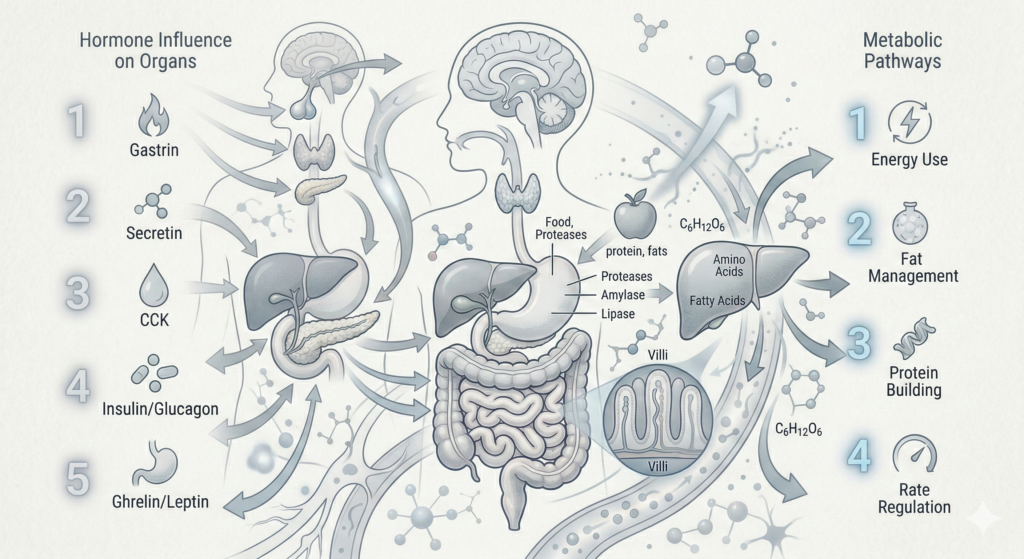
In women especially, digestion is not the same every day of the month.
Progesterone can slow gut movement in the luteal phase. Estrogen shifts can influence bloating. So symptoms may fluctuate even if your diet is consistent.
This is why many women with PCOS symptoms, irregular periods, endometriosis symptoms, or perimenopause symptoms notice cyclical digestive shifts.
Blood sugar stability also matters. Long gaps between meals, under eating, or repeated spikes can increase stress hormones. And stress hormones directly affect gut motility and overall metabolic health.
This is where blood sugar control becomes relevant, not just for diabetes risk, but for stable digestion.
It is layered. It is delayed. And it is rarely about a single meal.
What Actually Helps
Instead of more restriction, digestion often improves with more rhythm.
Eating at similar times daily.
- Not skipping meals.
- Keeping meals simple when stressed.
- Sitting down while eating.
- Slowing down chewing.
- Reducing screens during meals.
- Sleeping at consistent times.
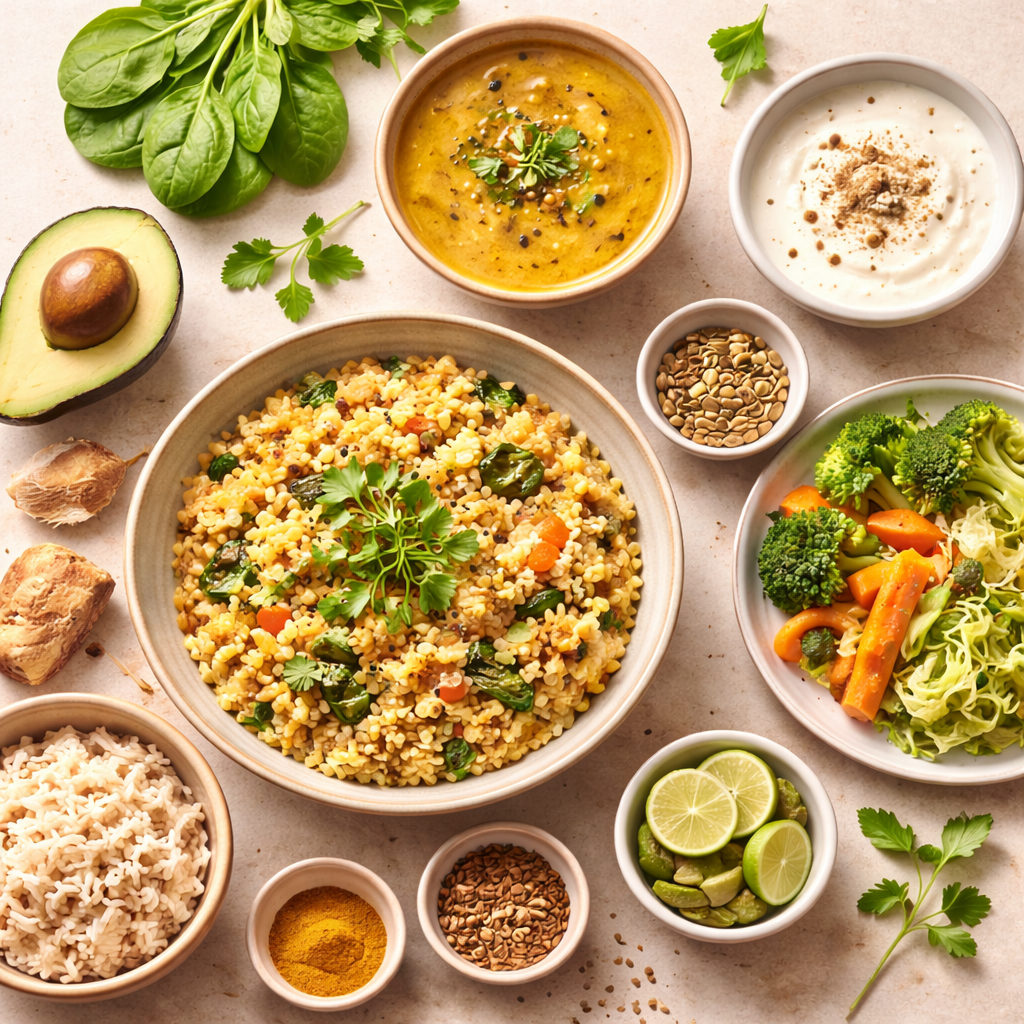
Warm, cooked, easier to digest foods during flare phases can help. So can reducing constant tracking and over analysis.
Predictability tells the nervous system it is safe. And safety improves digestion.
For some, gentle support like probiotics for women may help, but only when the system is ready, not as a replacement for regulation.
The Bigger Perspective
If your gut still struggles despite a “perfect” diet, it does not mean you are doing something wrong.
It may mean your system is overloaded.
Digestion is regulated. Not mechanical.
When the nervous system feels safe, when blood sugar is stable, when stress reduces, when the body feels nourished rather than restricted, digestion often improves without extreme interventions.
Sometimes the answer is not more rules.
Sometimes it is helping the body move out of defense mode.
And that shift changes everything.