
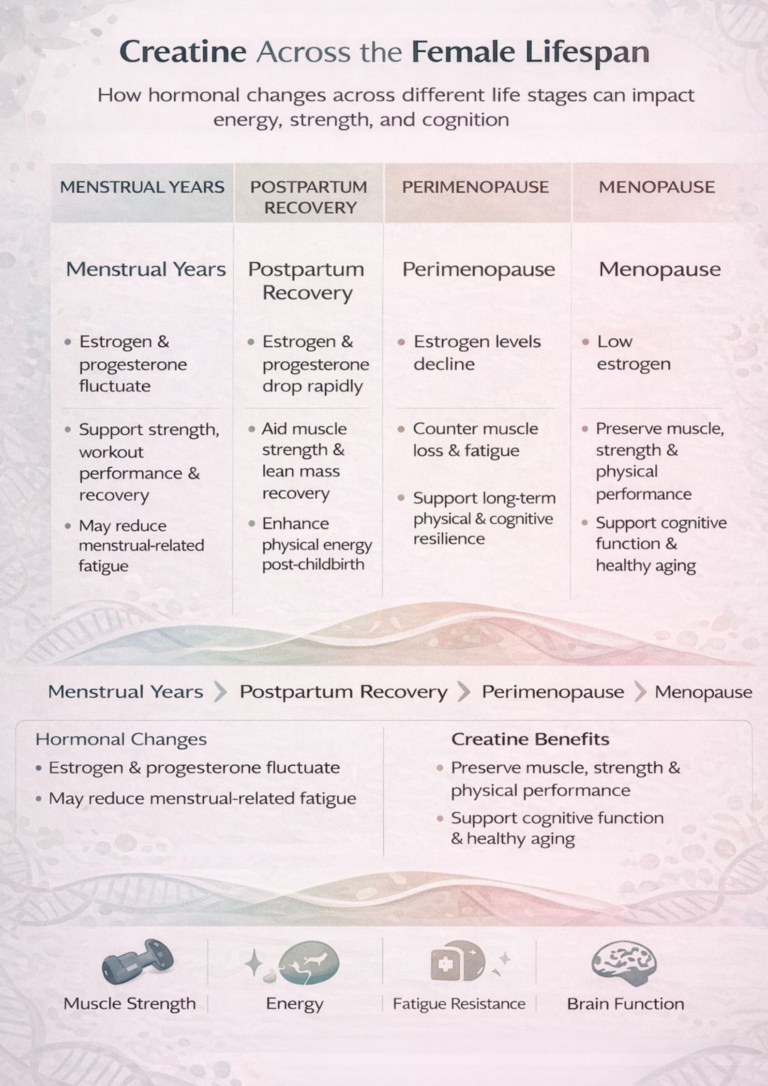
Women experience continuous hormonal shifts that influence energy, muscle health, cognition, and overall resilience across life stages. Because women naturally store less creatine, this energy-support compound may play a meaningful role in improving strength, performance, fatigue resistance, and brain function from menstrual years through menopause. This blog explores how creatine aligns with female hormonal physiology and where evidence supports its role across the lifespan, particularly in supporting hormone balance and metabolic health.
Women are not small men.
Our energy metabolism changes every month and every decade.
Female physiology is shaped by evolving hormonal patterns that influence muscle mass, cognition, mood, and physical performance. From reproductive years to menopause, fluctuations in estrogen and progesterone affect how the body produces, stores, and uses energy. As these hormones shift, so do women’s nutritional and metabolic needs, particularly when aiming to support hormone balance across life stages.
Creatine, a naturally occurring compound involved in cellular energy production, has traditionally been associated with male athletic performance. However, research highlights its relevance to women, particularly when examined through a hormonal and lifespan lens. Women typically have lower baseline creatine stores due to lower muscle mass and dietary intake, suggesting a meaningful opportunity for targeted benefit.
Because women generally begin with lower intramuscular and neural creatine levels, supplementation may enhance both physical stamina and cognitive endurance.
Creatine’s Role in Female Energy Metabolism
Creatine functions as a rapid energy buffer by supporting the regeneration of adenosine triphosphate (ATP), the body’s primary energy source. During physically or mentally demanding tasks, ATP is quickly depleted. Creatine helps recycle ATP, allowing muscle and brain cells to sustain energy output.
Beyond performance, creatine supports:
Neuromuscular efficiency
Cellular hydration
Fatigue resistance
Exercise recovery
Brain energy metabolism
Because women generally begin with lower intramuscular and neural creatine levels, supplementation may enhance both physical stamina and cognitive endurance, particularly during hormonally demanding stages that influence overall metabolic health.
Creatine During the Menstrual Years: Estrogen, Progesterone & Energy Demand
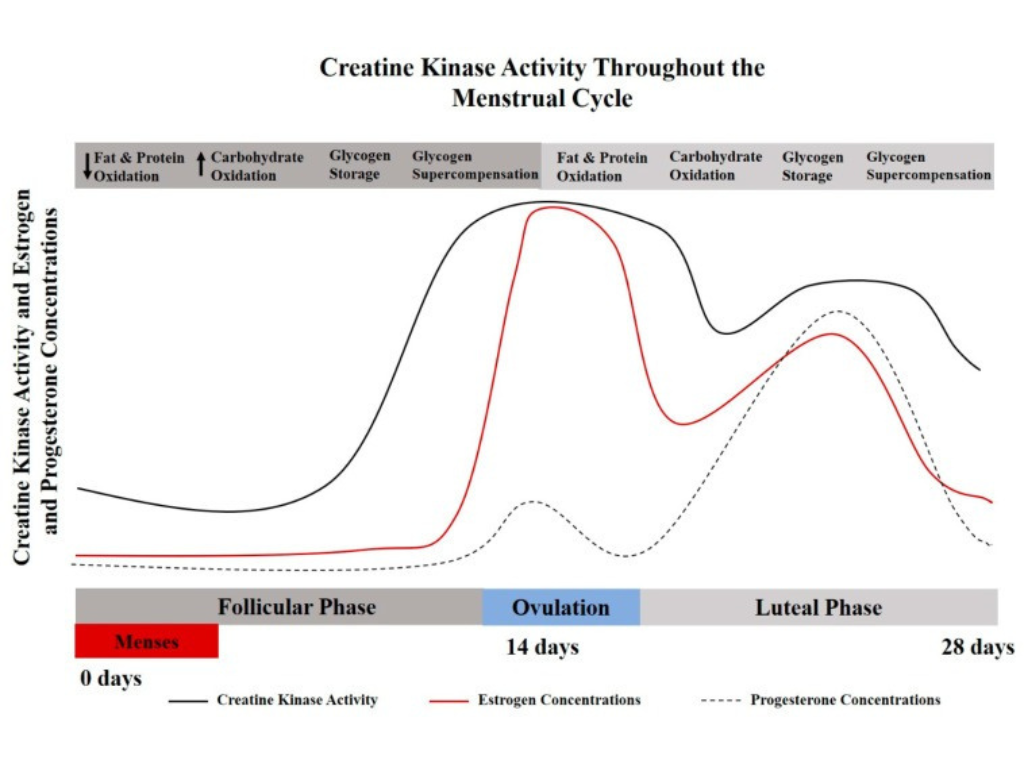
The menstrual cycle is governed by fluctuations in estrogen and progesterone, both of which influence muscle function, metabolism, and fatigue perception.
Estrogen and Energy Efficiency
Estrogen supports mitochondrial efficiency, muscle recovery, and creatine kinase activity, a key enzyme in cellular energy recycling. During higher-estrogen phases, endurance and recovery may improve, but metabolic demand also rises. Creatine supports ATP regeneration during these phases, helping muscles sustain workload with reduced fatigue and supporting overall hormone balance.
In women with PCOS, who often experience insulin resistance and altered muscle metabolism, improved training capacity through creatine-supported resistance training may contribute to better metabolic outcomes and support long-term PCOS weight loss goals through enhanced muscle adaptation.
Progesterone and Fatigue Sensitivity
Progesterone dominance during the luteal phase is associated with increased perceived effort, higher core body temperature, and greater fatigue sensitivity. Training tolerance may decrease.
Creatine supplementation may help stabilize cellular energy availability during this phase, supporting high-intensity output and improving recovery across the cycle.
Practical Benefits in Reproductive Years
Creatine monohydrate may support:
Improved strength and power
Greater tolerance to high-intensity training
Reduced neuromuscular fatigue
Faster recovery
More consistent performance despite hormonal fluctuations
By increasing phosphocreatine stores, creatine enables stronger adaptations without promoting unwanted bulk, supporting women focused on metabolic health and body composition goals.
Postpartum Recovery (After Lactation)
The postpartum phase involves sharp hormonal shifts, physical recovery from childbirth, sleep disruption, and increased cognitive demand. Rapid declines in estrogen and progesterone may contribute to fatigue, muscle weakness, and mental exhaustion.
After lactation, once medically cleared, creatine supplementation may support:
Restoration of muscle strength
Lean mass recovery
Physical endurance
Cognitive stamina
In women navigating postpartum weight loss, rebuilding lean mass and restoring metabolic capacity becomes central. Because research in postpartum women remains limited, supplementation during this phase should be guided by a healthcare professional or experienced women’s nutritionist, with individualized dosing and timing.
Creatine During Perimenopause
Perimenopause involves fluctuating and declining estrogen levels, often accompanied by perimenopause symptoms such as:
Lean muscle loss
Reduced exercise capacity
Increased fatigue
Mood changes
Brain fog
As estrogen declines, muscle protein synthesis efficiency and energy metabolism shift. Creatine may help counter these changes by enhancing ATP regeneration and improving resistance-training response.
Supplementation during this stage may:
Support lean mass preservation
Reduce perceived exertion
Improve strength and training capacity
Support mental clarity
Creatine’s role in brain energy metabolism may also contribute to improved emotional stability during hormonally volatile years.
Creatine in Menopause and Healthy Aging
After menopause, women experience accelerated sarcopenia, strength decline, and increased frailty risk. These changes influence independence and long-term metabolic health.
When combined with resistance training, creatine supplementation has been shown to:
Increase lean body mass
Improve muscular strength
Enhance functional performance
Support long-term mobility
While bone density findings are mixed, improved muscle strength contributes to better joint stability and fall prevention.
Creatine becomes particularly relevant in this stage as a strategy to preserve strength and physical resilience within a broader functional nutrition approach to aging.
Creatine, Mood & Brain Health
Creatine plays a meaningful role in brain energy metabolism. The brain relies heavily on ATP for memory, attention, and emotional regulation.
Research associates creatine supplementation with:
Reduced mental fatigue
Improved attention and processing speed
Support for executive function
Reduced depressive symptoms when combined with antidepressant therapy
Creatine may also buffer brain fog and cognitive strain during hormonally transitional phases such as perimenopause, where maintaining hormone balance becomes increasingly important.
Safety & Dosing
Creatine is widely regarded as safe in healthy adults.
Typical maintenance dosing:
3–5 g per day
Individual needs vary and should be guided by a healthcare professional, particularly in postpartum recovery, insulin resistance, or in the presence of medical conditions.
Conclusion
Women’s bodies evolve. Our hormones shift, our energy changes, and our needs are not static. Supporting health across the lifespan requires strategies that adapt with us.
Creatine is not about chasing performance for the sake of it. It is about preserving strength, supporting energy, and protecting resilience — from menstrual years to menopause. When used thoughtfully and responsibly, it can be a practical, science-backed tool that works with female physiology, supporting hormone balance and long-term metabolic health.
Disclaimer
This article is for educational purposes only and is not intended to replace medical advice, diagnosis, or treatment. Creatine supplementation should not be considered a substitute for individualized medical care. If you have any underlying health condition, are pregnant or breastfeeding, have kidney concerns, or are taking medications, consult your healthcare practitioner before starting supplementation. Individual needs and responses may vary.